
Here is a fact that might surprise you: the fanciest firewall, the most expensive antivirus, and the strongest endpoint security system in the world can all be defeated by one person clicking a bad link in an email. That person is not a villain. They are just an employee who was never taught what a phishing email looks like.
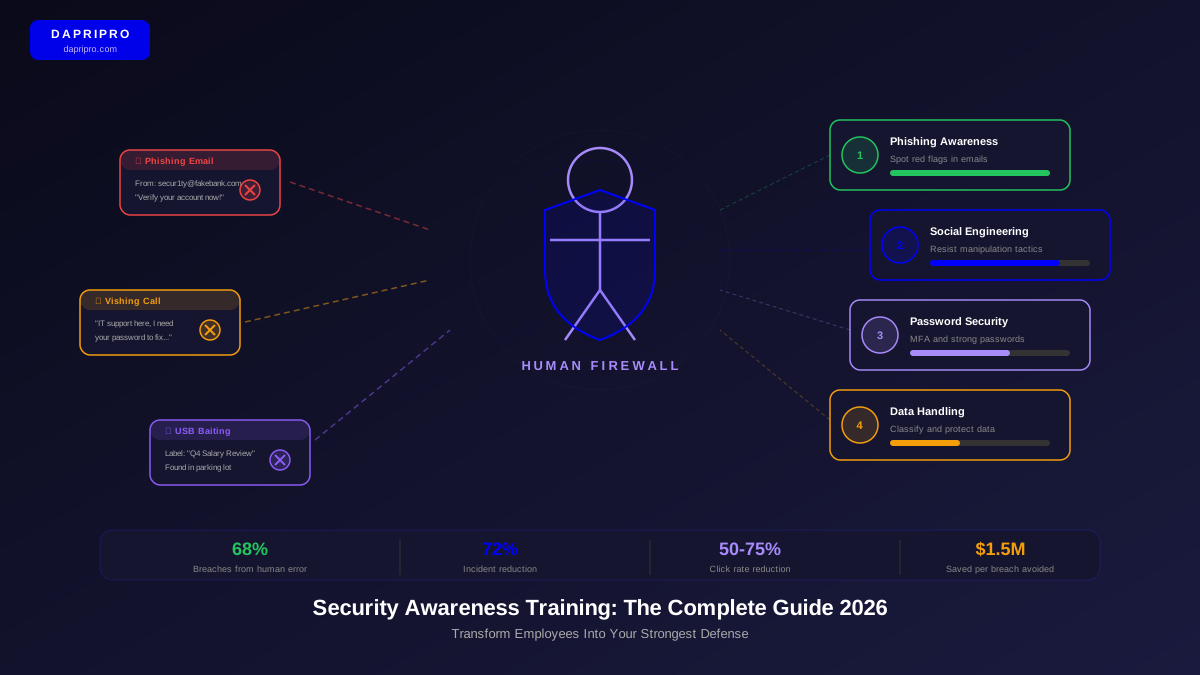
That is why security awareness training matters so much. It turns regular employees — the people hackers love to target — into a "human firewall" that can spot threats before they cause damage.
In this guide, we will walk through everything you need to build a cyber security training program for employees that actually changes behavior. Not boring slideshows. Not checkbox compliance. Real training that makes your organization dramatically harder to hack.
Why Employees Are the Biggest Target
Hackers figured out something important a long time ago: why spend weeks breaking through technical defenses when you can just trick a human into opening the door?
The 2024 Verizon Data Breach Investigations Report found that 68% of breaches involved a non-malicious human element. That means well-meaning employees accidentally let attackers in — usually by clicking phishing links, using weak passwords, or sharing sensitive data they should not.
Think of it like a castle. You can build walls 50 feet high with boiling oil and crocodiles in the moat. But if someone inside opens the gate because a stranger said "pizza delivery," none of those defenses matter.
The social engineering attacks used today are incredibly sophisticated. Hackers use AI to write perfect emails that look exactly like messages from your boss, your bank, or your IT department. Without phishing awareness training, most employees cannot tell the difference.
What Security Awareness Training Actually Is
Security awareness training teaches employees to recognize, avoid, and report cyber threats. It covers phishing, social engineering, password hygiene, safe browsing, data handling, and physical security.
But here is the key difference between good training and bad training: good training changes behavior. Bad training just checks a compliance box.
A good security awareness program includes these core elements:
- Phishing simulations — fake phishing emails sent to employees to test their response and teach them in the moment
- Micro-learning modules — short 3-5 minute lessons delivered regularly instead of one long annual session
- Interactive content — videos, quizzes, games, and scenarios that keep people engaged
- Real-time coaching — immediate feedback when someone clicks a simulated phish, so they learn while the experience is fresh
- Behavioral tracking — measuring actual behavior changes, not just quiz scores
- Culture building — creating an environment where reporting suspicious emails is praised, not punished
Phishing Simulations: Your Most Powerful Tool
If you only do one thing from this entire guide, do this: run regular phishing simulations.
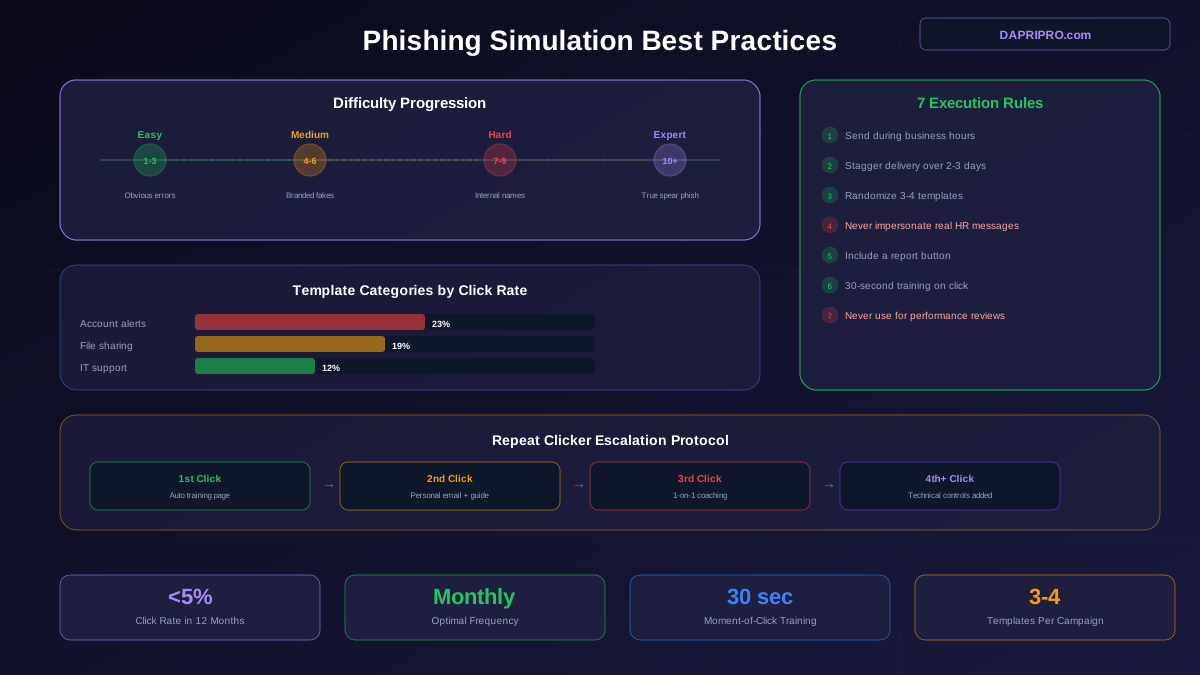
Phishing simulations are fake phishing emails that you send to your own employees. When someone clicks the link, they get a friendly coaching page that shows them what they missed and how to spot it next time. No punishment. Just learning.
Why are simulations so effective? Because they create "muscle memory." After getting caught by a few simulated phishing emails, employees start automatically pausing and checking before clicking. That habit saves organizations millions of dollars.
How to Run Effective Phishing Simulations
Follow these rules to get the most out of your phishing simulation program:
- Start with a baseline test. Before any training, send a simulated phishing email to your entire organization. Do not warn anyone. Track who clicks, who reports, and who ignores it. This gives you your starting number to improve against.
- Vary the difficulty. Start with obvious phishing attempts and gradually increase sophistication. Include different types: fake package deliveries, password reset requests, CEO impersonation, invoice fraud, and shared document links.
- Send monthly campaigns. Research shows that training effectiveness drops significantly after 4-6 months without reinforcement. Monthly simulations keep awareness sharp.
- Deliver immediate feedback. When someone clicks a simulated phish, show them a coaching page within seconds. This "teachable moment" is when learning sticks best.
- Never publicly shame clickers. Public humiliation kills your security culture. People stop reporting real threats because they fear embarrassment. Keep results confidential between the employee and their manager.
- Celebrate reporters. When someone correctly reports a simulated phishing email, send them a congratulations message. Make reporting feel rewarding.
Organizations that follow this approach typically see phishing click rates drop from 25-35% down to 3-5% within 12 months. That is a massive reduction in risk.
Understanding Social Engineering Attacks
Phishing is the most common social engineering attack, but it is not the only one. Your social engineering training program should cover all the tricks hackers use to manipulate people:
| Attack Type | How It Works | Real-World Example |
|---|---|---|
| Phishing | Fake emails with malicious links or attachments | Email pretending to be from Microsoft asking you to "verify your account" |
| Spear phishing | Targeted phishing using personal details about the victim | Email mentioning your actual project names and coworker names |
| Vishing | Voice phishing over phone calls | Caller pretending to be IT support asking for your password |
| Smishing | Phishing via text messages | SMS saying "your package is delayed" with a tracking link |
| Pretexting | Creating a fake scenario to extract information | Someone calling as a "vendor" needing your company bank details |
| Baiting | Leaving infected USB drives or offering free downloads | USB labeled "Q4 Salary Review" left in the parking lot |
| Tailgating | Following authorized people through secure doors | Someone carrying boxes asking you to hold the door |
Each attack type exploits a different human emotion: fear, curiosity, greed, helpfulness, or urgency. Training should teach employees to recognize these emotional triggers.
"People are the weakest link in security, but with the right training, they become the strongest. A well-trained employee spots what technology misses." — Kevin Mitnick, former hacker turned security consultant
Gamification: Making Training Actually Stick
Let us be honest. Nobody likes sitting through a 45-minute security training video. Gamification in security training solves this problem by making learning fun and competitive.
Gamification means adding game-like elements — points, badges, leaderboards, challenges, and rewards — to your training program. It works because it taps into basic human psychology. People naturally want to compete, achieve, and earn recognition.
Here is what the research shows about gamified security training platforms:
- 60% higher completion rates compared to traditional training
- 40% better knowledge retention after 90 days
- 3x more likely to voluntarily return for additional training modules
- Significantly higher engagement scores on employee satisfaction surveys
Effective gamification strategies include:
- Department competitions. Which team can achieve the lowest phishing click rate this quarter? Post anonymized results on a leaderboard.
- Achievement badges. "Phishing Spotter," "Password Pro," "Security Champion" — let people show off their security skills.
- Points and rewards. Award points for completing modules, reporting suspicious emails, and passing quizzes. Offer small rewards like gift cards or extra break time.
- Interactive scenarios. "Choose your own adventure" style simulations where employees navigate realistic cybersecurity situations.
Best Security Awareness Training Platforms for 2026
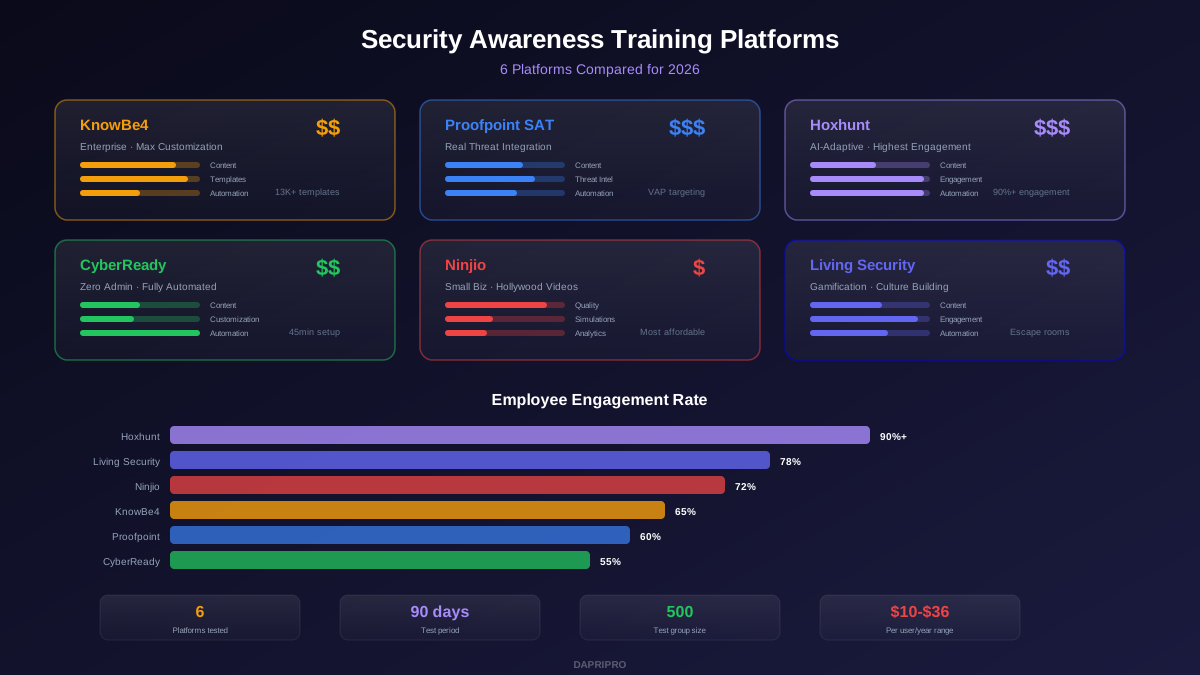
Choosing the right security training platform is critical. Here is how the top solutions compare based on our hands-on testing and industry research:
| Platform | Best For | Phishing Simulation | Content Library | Starting Price (per user/year) |
|---|---|---|---|---|
| KnowBe4 | All organization sizes | Industry leader — 14,000+ templates | 1,400+ modules | $18 |
| Proofpoint | Email-security-focused orgs | Excellent — integrates with email data | 800+ modules | $25 |
| Hoxhunt | Gamification-first approach | AI-adaptive simulations | 500+ modules | $30 |
| SANS Security Awareness | Technical audiences | Good — NIST-aligned content | 350+ modules | $28 |
| Curricula | Small to mid-size businesses | Solid essentials | 200+ modules | $15 |
| Cofense | Phishing-simulation specialists | Military-grade simulation engine | 400+ modules | $22 |
For a detailed comparison of features, pricing, and user reviews, check out our full platform comparison guide.
Building Your Program Step by Step
Ready to build a security awareness program from scratch? Follow these steps:
Step 1: Get Leadership Buy-In
Before anything else, you need support from the top. Present these numbers to your executives:
- The average cost of a data breach is $4.88 million (IBM Cost of a Data Breach Report 2024)
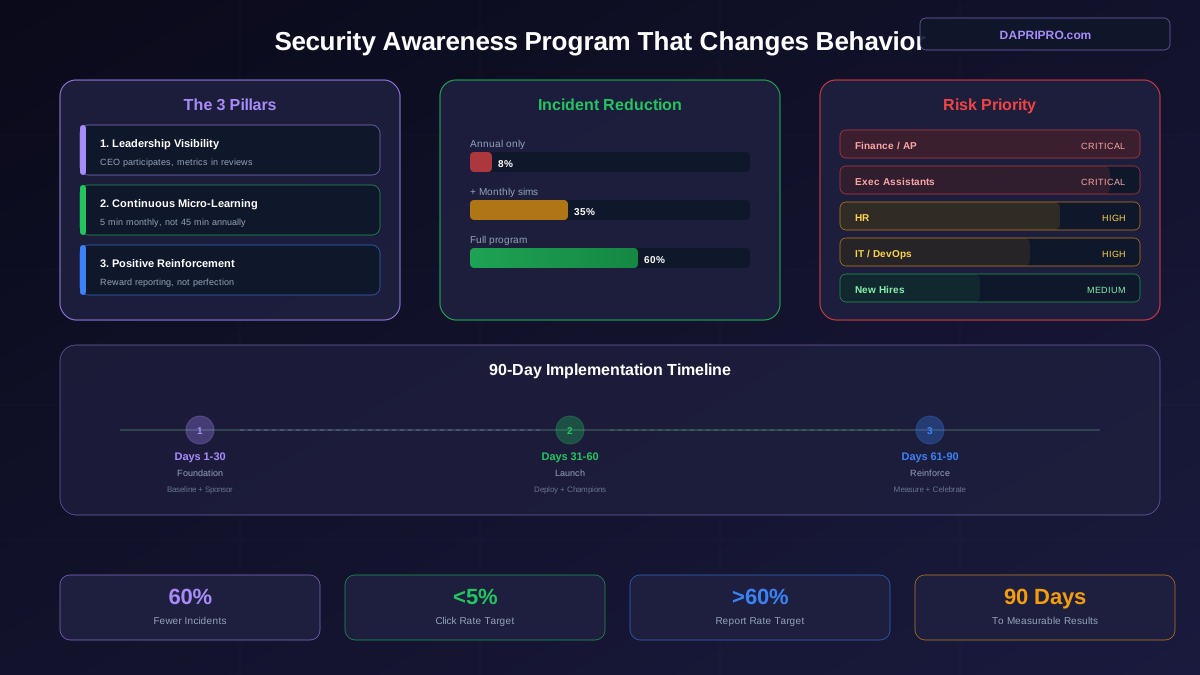
- Organizations with security awareness training experience 50-70% fewer security incidents
- Training typically costs $20-50 per employee per year — a tiny fraction of potential breach costs
- Many compliance frameworks (SOC 2, ISO 27001, HIPAA, PCI DSS) require security awareness training
Step 2: Run a Baseline Assessment
Send a simulated phishing email to everyone before launching any training. This tells you exactly how vulnerable your organization is today. Save these numbers — you will compare against them to prove ROI later.
The average first-time phishing simulation click rate is 25-35%. If yours is higher, do not panic — that just means there is more room for improvement.
Step 3: Choose Your Platform
Pick a security training platform that fits your needs. Consider these factors:
- Organization size. Some platforms are built for enterprise, others shine at small to mid-size.
- Content style. Does your team prefer short videos, interactive simulations, or text-based lessons?
- Integration needs. Does it connect with your email security tools and identity management systems?
- Reporting. Can you easily track progress and generate reports for compliance audits?
- Language support. Important for global organizations with multilingual workforces.
Step 4: Launch Training in Phases
Do not dump everything on employees at once. Roll out training in phases:
- Month 1: Phishing awareness basics — what phishing is, how to spot it, how to report it
- Month 2: Password security and multi-factor authentication
- Month 3: Social engineering and manipulation tactics
- Month 4: Safe browsing and public Wi-Fi dangers
- Month 5: Data handling and classification
- Month 6: Physical security and clean desk policy
Each month, combine a 5-minute learning module with a phishing simulation related to that month's topic.
Step 5: Measure and Improve
Track these four key metrics to measure your security awareness ROI:
- Phishing click rate. Your north-star metric. It should decrease steadily over time. Industry leaders achieve below 2%.
- Report rate. The percentage of employees who report suspicious emails rather than ignoring or clicking them. This should increase over time.
- Time to report. How quickly do employees flag suspicious emails? Faster reporting means faster incident response.
- Repeat offender rate. What percentage of employees click simulated phishing emails more than once? This group needs extra attention and coaching.
Building a Security Culture That Lasts
Training is just the beginning. The real goal is building a security culture — an environment where security becomes part of how everyone thinks and works, not just something IT worries about.
Here is how to build lasting security culture:
- Lead from the top. When the CEO openly participates in training and talks about security, everyone pays attention. Leadership must walk the talk.
- Make reporting easy. Add a "Report Phishing" button to your email client. The fewer clicks it takes to report, the more reports you will get.
- Share wins. Send monthly newsletters celebrating how many phishing emails were caught, how click rates have dropped, and which departments are leading.
- Recognize security champions. Identify and empower employees who show exceptional security awareness. Give them a title, extra training access, and a voice in security decisions.
- Remove fear of reporting. If someone clicks a real phishing link and reports it immediately, praise them for reporting — do not punish them for clicking. Fast reporting limits damage.
- Connect security to personal life. Teach employees that the same skills protect their personal email, bank accounts, and social media. When security training helps people personally, they engage more at work.
Compliance Requirements for Security Awareness Training
Many regulatory frameworks and industry standards require security awareness training. Here is a quick reference:
| Framework | Training Requirement | Frequency |
|---|---|---|
| SOC 2 | Security awareness for all employees | Annual minimum |
| ISO 27001 | Information security awareness program | Ongoing |
| HIPAA | PHI security training for all workforce members | Annual minimum |
| PCI DSS 4.0 | Security awareness for all personnel | Annual + upon hire |
| NIST CSF | Awareness and training program | Continuous recommended |
| GDPR | Data protection awareness for data handlers | Regular intervals |
| CMMC | Cybersecurity awareness for all users | Annual minimum |
Meeting compliance minimums is important. But the organizations that truly reduce risk go far beyond annual checkbox training. They train continuously.
AI-Powered Threats and Why Training Matters More Than Ever
In 2026, attackers are using artificial intelligence to create phishing emails that are nearly impossible to distinguish from legitimate messages. AI can:
- Write perfect grammar in any language — eliminating the spelling errors that used to be easy red flags
- Clone voices for vishing attacks using just 3 seconds of audio
- Create deepfake video calls impersonating executives
- Personalize attacks at scale using data scraped from social media
- Generate convincing fake websites in minutes
This means employee cybersecurity training is more critical than ever. When AI eliminates the technical clues, trained human judgment becomes the last line of defense. Your training program needs to evolve to address these AI-enhanced threats specifically.
Implement zero trust architecture alongside your training program. Even if someone gets tricked, zero trust limits what an attacker can access.
Common Mistakes That Kill Training Programs
Avoid these mistakes that undermine even well-intentioned programs:
- Annual-only training. Training once a year is barely better than not training at all. Knowledge fades within months without reinforcement. Run monthly touchpoints.
- Punishing clickers. Shaming employees who fail simulations creates a culture of fear and hiding — the opposite of what you want. Use failures as teaching moments.
- Boring content. If your training consists of 60-minute compliance videos, nobody is learning. Use short, engaging, interactive content.
- No executive participation. When leaders skip training, they signal it is not important. Executives must participate visibly.
- Ignoring metrics. Running simulations without tracking and acting on the data wastes everyone's time. Use data to target your weakest areas.
- One-size-fits-all. IT staff need different training than accountants. Customize content based on role, department, and risk level.
- Forgetting new hires. New employees should receive security awareness training within their first week — not months later at the next annual session.
Take Action Today
Building a strong security awareness training program is one of the highest-ROI investments in cybersecurity. It directly addresses the #1 cause of breaches — human error — at a fraction of the cost of technical solutions.
Here is your action plan:
- Run a baseline phishing simulation this week
- Present the business case to leadership using the statistics from this guide
- Evaluate 2-3 security training platforms
- Launch your first micro-learning module within 30 days
- Set up monthly phishing simulation campaigns
- Begin tracking your key metrics from day one
Remember: the goal is not perfection. It is building a culture where employees recognize threats, report them quickly, and learn from mistakes. Start today, improve continuously, and your organization will be dramatically harder to hack.
For more on protecting your organization, explore our guides on social engineering defense and building behavior-changing security programs.