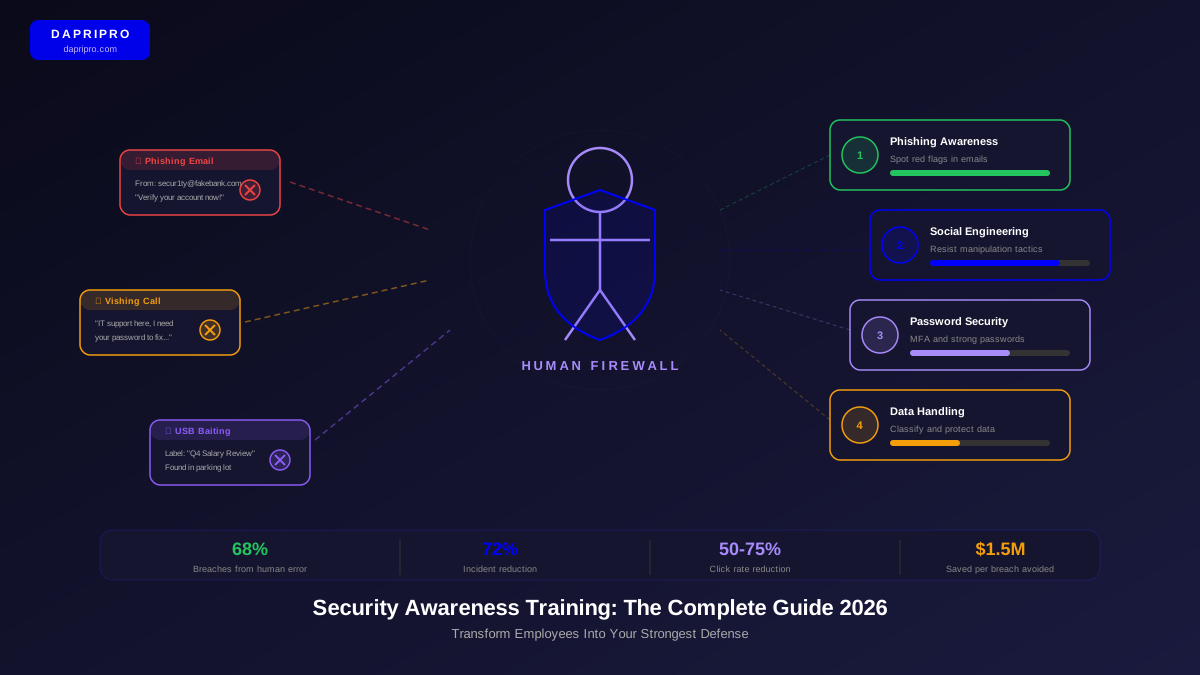

Here is the uncomfortable truth about most security awareness programs: they exist to satisfy an auditor, not to change behavior. A company buys a platform, assigns the annual training in January, chases stragglers through March, and checks the compliance box. The phishing click rate drops briefly, climbs back up by summer, and the cycle repeats next year.
This is not a training problem. It is a program design problem. The difference between a program that changes behavior and one that checks boxes comes down to three things: frequency, psychology, and measurement.
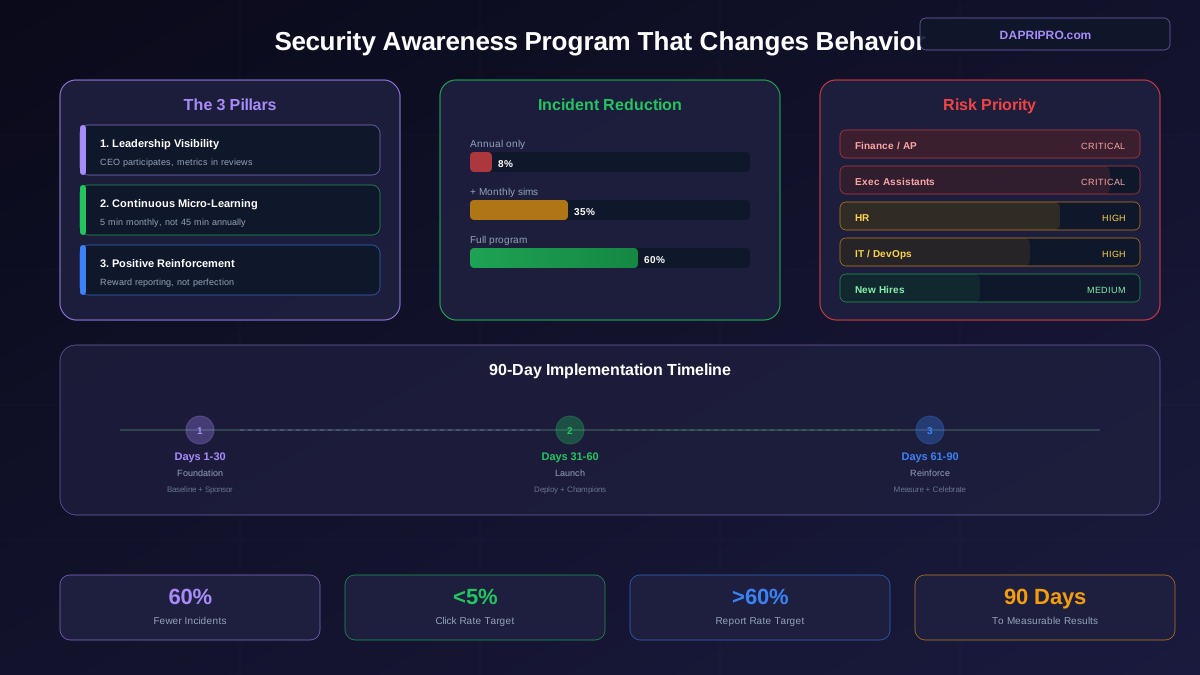
Companies that get all three right see 60% fewer security incidents. Here is how to build that program.
Why Most Programs Fail
Traditional security awareness follows what psychologists call the "knowledge deficit model" — the assumption that people make bad security decisions because they lack knowledge. So the solution is to dump more knowledge: longer videos, more slides, additional modules.
But knowledge is not the problem. Your employees know they should not click suspicious links. They know they should use strong passwords. They know they should not plug in random USB drives. They do it anyway because:
- Time pressure overrides caution. When the CEO appears to urgently need something, verifying feels like wasting time.
- Habit beats knowledge. People default to their fastest routine. If the fastest routine is clicking links without checking, no amount of training video changes that.
- No consequences for risky behavior. If clicking a phishing link has never led to a real problem (that they know of), the brain files it as safe.
- Training was forgettable. A 45-minute video in January is forgotten by February. The brain does not retain information that is not reinforced.
The fix: stop trying to teach security and start building security habits.
The 3-Pillar Framework
Pillar 1: Leadership Visibility
If the CEO skips security training but sends a company-wide email saying "everyone must complete it," the message employees hear is: "this is not important enough for leadership." Visible leadership participation is non-negotiable.
What leadership visibility looks like:
- CEO completes the same phishing simulations as everyone else (and shares their results)
- Security metrics appear in quarterly business reviews alongside revenue and customer metrics
- Department heads recognize employees who report suspicious emails in team meetings
- CFO approves budget for security training without requiring ROI justification (because the alternative is a breach)
Pillar 2: Continuous Micro-Learning
Replace the annual 45-minute training marathon with 5-minute monthly micro-sessions. Each session covers one topic and includes a practical exercise. The schedule:
| Month | Topic | Exercise |
|---|---|---|
| January | Phishing red flags | Spot the phish: 5 emails |
| February | Password security | Create a passphrase live |
| March | Social engineering | Role-play a pretexting call |
| April | Physical security | Tailgating awareness walk |
| May | Data handling | Classify sample documents |
| June | Mobile device security | Check your own settings |
| July | Advanced phishing | Spear phish simulation |
| August | Incident reporting | Practice the report process |
| September | Travel security | Secure a travel scenario |
| October | Cybersecurity awareness month | Company-wide CTF event |
| November | BEC and wire fraud | Verify a payment request |
| December | Year in review | Security quiz with prizes |
Pillar 3: Positive Reinforcement
Punishment does not build habits — reinforcement does. When employees are punished for failing phishing simulations (mandatory extra training, manager notification, public shaming), they learn to hide mistakes instead of reporting them. This is the opposite of what you want.
The positive reinforcement approach:
- Reward reporting, not perfection. An employee who clicks a phishing link but reports it immediately is more valuable than one who deletes it silently.
- Celebrate improvement. "Finance reduced their click rate from 28% to 9%" is more motivating than "Engineering had zero clicks."
- Make recognition visible. Monthly security champion announcements, digital badges, small gift cards for top reporters.
- Remove blame from language. Replace "you failed the simulation" with "this was a tough one — here is what to look for next time."
Start with Your Riskiest Groups
Not all employees carry the same security risk. A developer with admin access who clicks a phishing link causes more damage than a marketing intern. Prioritize training for high-risk groups first:
| Group | Risk Level | Why They Are Targeted | Training Focus |
|---|---|---|---|
| Finance / AP | Critical | Wire transfer authority | BEC, invoice fraud, payment verification |
| Executive Assistants | Critical | Broad access, trusted position | CEO impersonation, gift card scams |
| HR | High | PII access, payroll changes | W-2 theft, payroll redirect fraud |
| IT / DevOps | High | System admin access | Credential theft, supply chain attacks |
| New Hires | Medium | Unfamiliar with company processes | General phishing, reporting procedures |
Measuring What Matters
If your only metric is "training completion percentage," you are measuring whether people clicked through slides — not whether they changed behavior. Track these behavioral metrics instead:
Primary metrics (measure monthly):
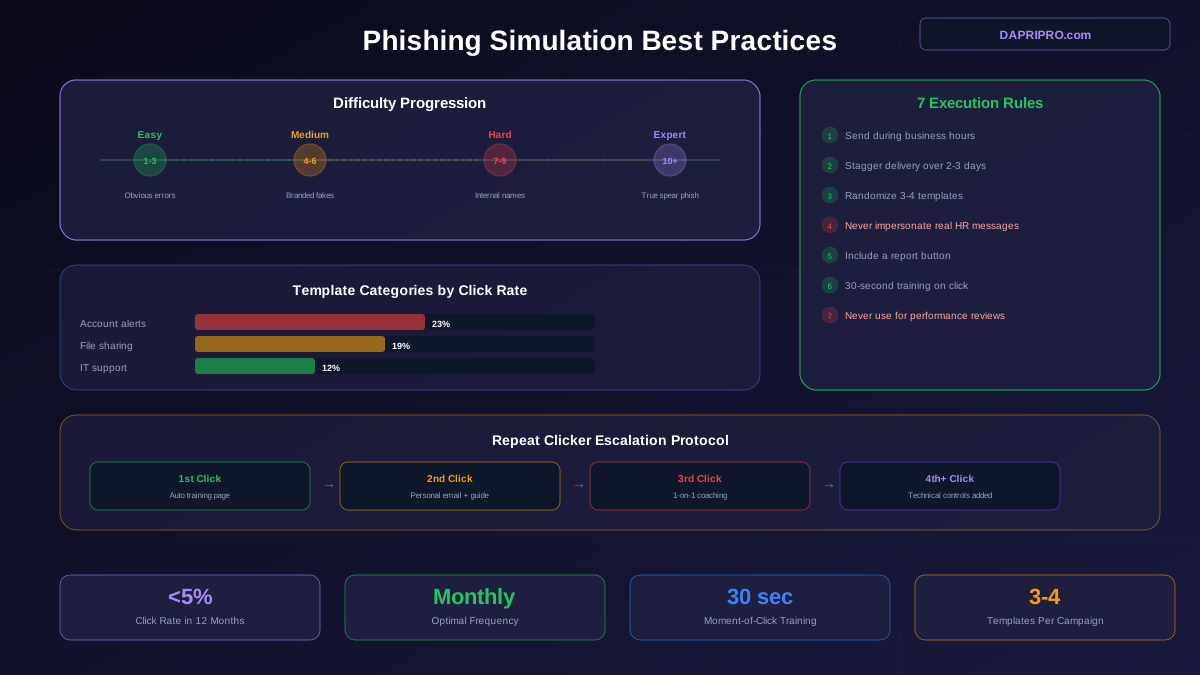
- Phishing click rate: Percentage of employees who click simulated phishing links. Target: below 5% after 12 months.
- Report rate: Percentage who use the report button on simulations. Target: above 60%. This is more important than click rate.
- Time-to-report: How quickly employees report suspicious emails. Target: median under 10 minutes.
Secondary metrics (measure quarterly):
- Real incident count: Actual phishing attempts, credential compromises, and malware infections. This is the ultimate outcome metric.
- Password policy compliance: Percentage of employees using the password manager, enabling MFA, and meeting complexity requirements.
- Training engagement score: Completion rate plus quiz scores plus time spent — a composite metric.
Building a Security Culture (Not Just a Program)
A program is something you do. A culture is something you are. The difference:
- Program: Employees report phishing because they are supposed to. Culture: Employees report phishing because they want to protect the team.
- Program: Security training is IT's responsibility. Culture: Every department owns its security posture.
- Program: Compliance drives behavior. Culture: Pride and peer accountability drive behavior.
To build culture, appoint Security Champions — one volunteer per department who receives extra training and serves as the first point of contact for security questions. These are not security professionals; they are regular employees who care about the topic. They amplify the security team's message through everyday conversations.
90-Day Implementation Timeline
Days 1-30: Foundation
- Get executive sponsor committed to visible participation
- Run initial phishing simulation to establish baseline click rate
- Identify top 3 high-risk departments
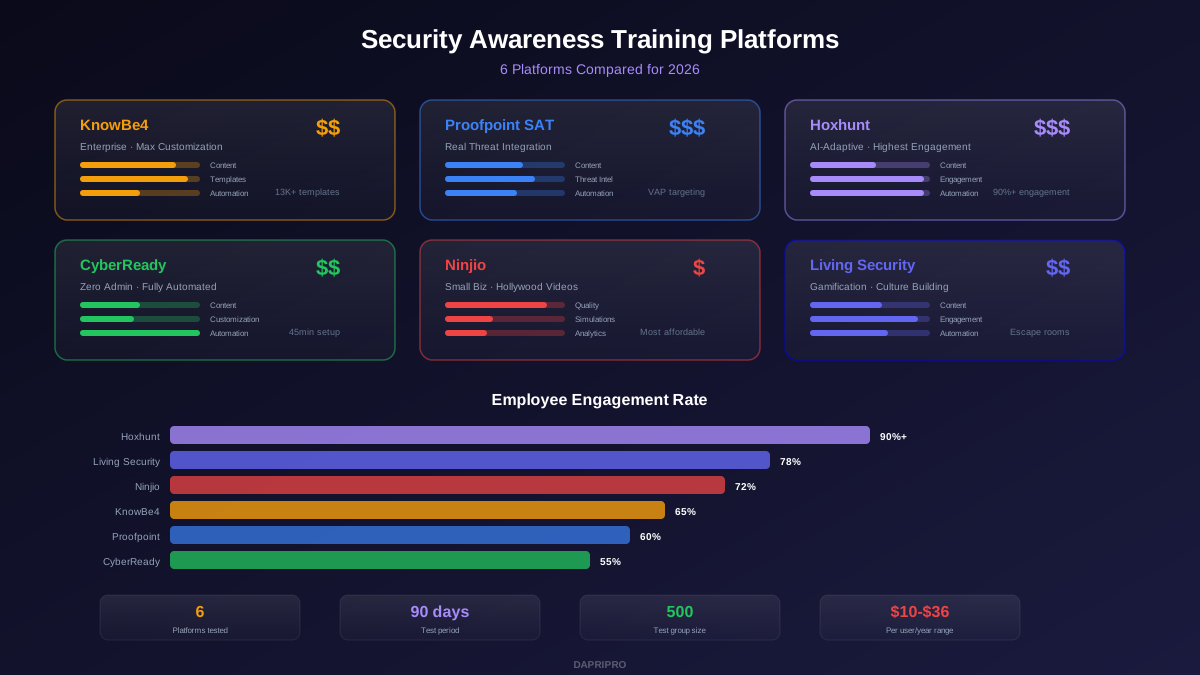
- Select a training platform or decide on free tools
Days 31-60: Launch
- Announce program company-wide with CEO endorsement
- Deploy first micro-learning module
- Launch department leaderboard for phishing simulations
- Recruit Security Champions (1 per department)
Days 61-90: Reinforce
- Run second and third phishing simulations (increasing difficulty)
- Celebrate early wins publicly (improved click rates, first reports)
- Present first metrics report to leadership
- Adjust content strategy based on click and engagement data
The program that changes behavior is not the one with the best content — it is the one that shows up consistently every month, reinforces the right behaviors, and makes security feel like a shared responsibility instead of an IT mandate. Start with monthly phishing simulations, a department leaderboard, and a no-blame reporting culture. Build from there.