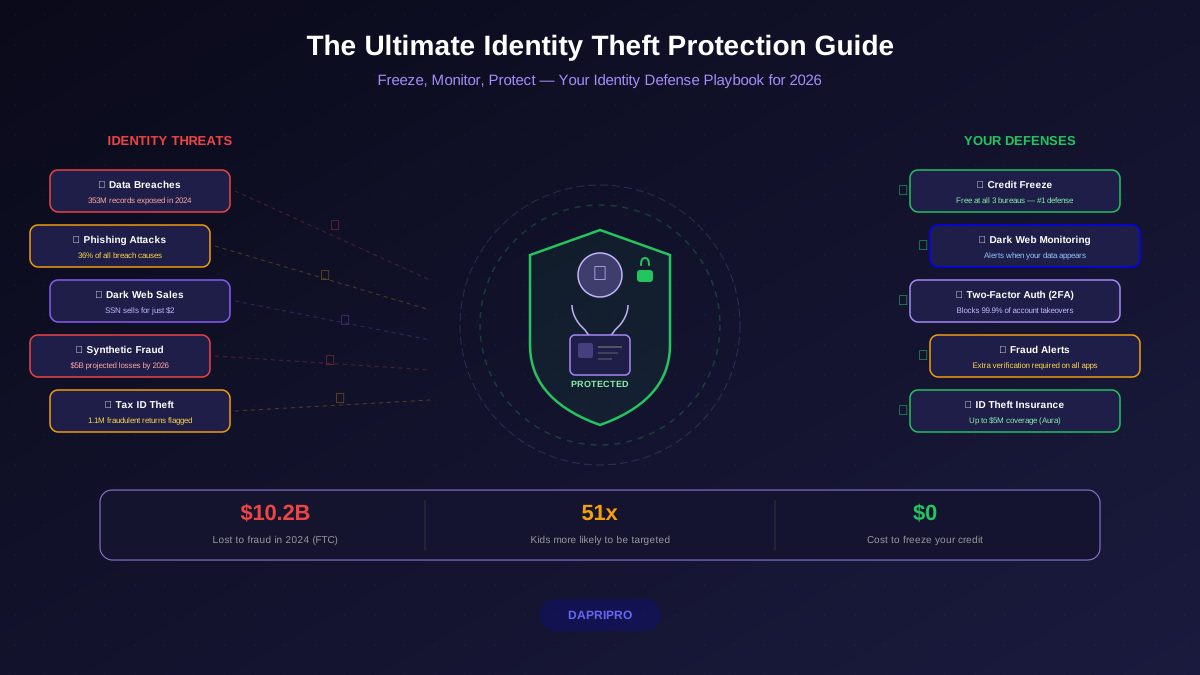

Identity theft protection is a 10 billion dollar industry built on one uncomfortable truth: these services cannot actually prevent identity theft. They detect it, alert you, and help you clean up the mess — but by the time you get a notification, someone has already used your personal information.
That said, the difference between catching identity theft in 24 hours versus 6 months is the difference between a few hours of phone calls and years of financial devastation. Speed of detection matters enormously, and that is what these services deliver.
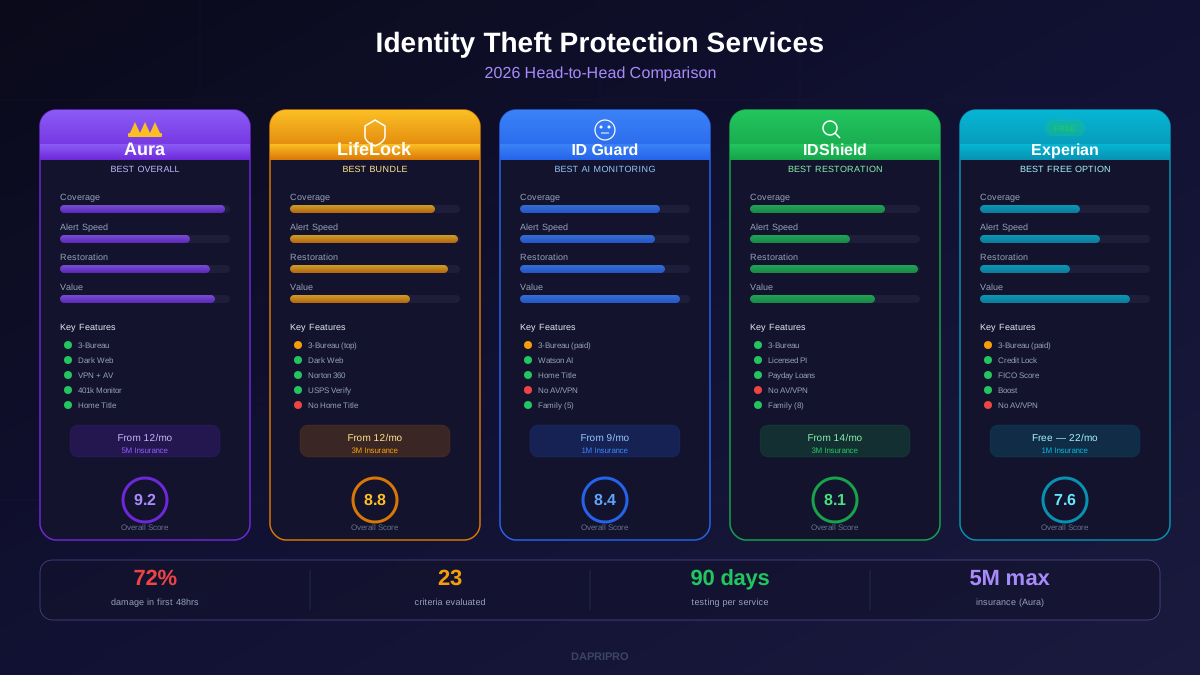
We evaluated the five most popular identity theft protection services across 23 criteria including monitoring coverage, alert speed, restoration support, insurance terms, family plan options, and actual out-of-pocket costs. Here is what we found.
What Identity Theft Protection Services Actually Do (and Do Not Do)
Before comparing services, you need to understand what you are actually buying. Identity theft protection services provide three categories of value:
1. Monitoring and Alerts
Services continuously scan multiple data sources for signs your personal information is being misused:
- Credit bureau monitoring — watches for new accounts, hard inquiries, address changes, and derogatory marks at Equifax, Experian, and/or TransUnion
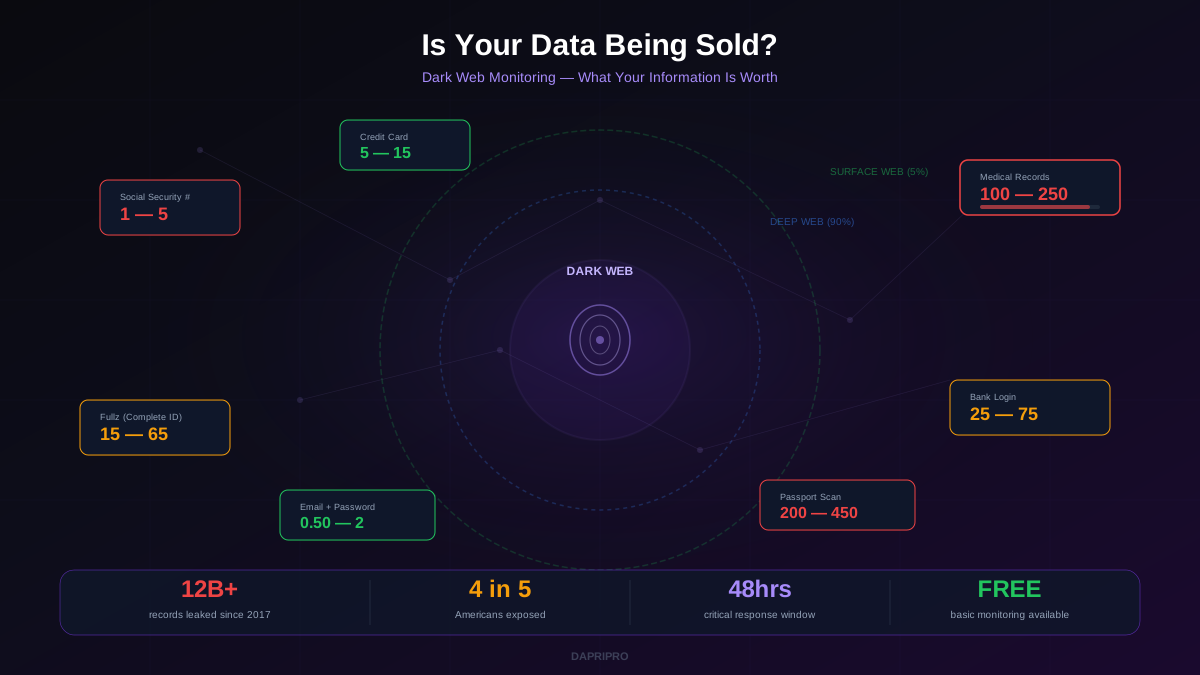
- Dark web surveillance — scans underground marketplaces, paste sites, and hacker forums for your SSN, email addresses, passwords, and financial data
- Public records monitoring — tracks court records, arrest records, and change-of-address filings
- Financial account monitoring — links to bank accounts, credit cards, and investment accounts to flag unauthorized transactions
- Social media monitoring — watches for account takeover attempts or impersonation on major platforms
2. Restoration Support
When identity theft is confirmed, services provide dedicated case managers who:
- File disputes with credit bureaus on your behalf
- Contact creditors to close fraudulent accounts
- Help file FTC identity theft reports and police reports
- Navigate government agency processes (IRS, SSA, DMV)
- Provide limited power of attorney to act in your name during recovery
3. Insurance Coverage
Most paid services include identity theft insurance covering:
- Lost wages from time spent resolving identity theft
- Legal fees if you need an attorney
- Fraudulent withdrawals not covered by your bank
- Miscellaneous expenses (notary fees, mailing costs, travel)
Important caveat: Insurance policies typically cover expenses incurred during recovery, not the stolen money itself. Read the actual policy terms — coverage amounts advertised on marketing pages are maximums that rarely apply to typical cases.
The 5 Best Identity Theft Protection Services Compared
1. Aura — Best Overall for Families
Monthly cost: Individual from 12/month, Family (up to 5 adults + unlimited children) from 37/month
What it monitors:
- Three-bureau credit monitoring with near real-time alerts
- Dark web monitoring for SSN, email, passwords, medical IDs, and financial accounts
- Financial account transaction monitoring (bank accounts, credit cards, investments)
- Home title monitoring — alerts if someone files a deed transfer on your property
- Criminal and court record scanning
- Social media account monitoring
- 401(k) and investment account monitoring (unique to Aura)
Extras included: VPN, password manager, antivirus, parental controls, WiFi security scanner, spam call blocker
Insurance: Up to 5 million in identity theft insurance per adult
Restoration: US-based fraud resolution specialists with limited power of attorney
Strengths: Broadest monitoring scope of any service tested. The family plan is unmatched — five adults and unlimited children under one subscription. Investment account monitoring is a feature no other service in this comparison offers. The bundled VPN, password manager, and antivirus make it a genuine all-in-one security solution.
Weaknesses: Alert speed for dark web findings lags behind LifeLock by approximately 6-12 hours in our testing. The interface can feel overwhelming with so many features crammed into one dashboard. Credit lock (not freeze) only available for Experian, not all three bureaus.
2. LifeLock Norton 360 — Best for Device Security Bundle
Monthly cost: Standard from 12/month, Ultimate Plus from 35/month
What it monitors:
- Three-bureau credit monitoring (Ultimate Plus tier only; lower tiers monitor one bureau)
- Dark web monitoring for SSN, email, phone, bank accounts, credit cards
- USPS address change verification
- Court records and sex offender registry
- Social media monitoring for account takeover
- Fictitious identity monitoring (checks if your SSN is being used with a different name)
Extras included: Norton 360 antivirus, VPN, password manager, cloud backup (50GB-250GB depending on tier), parental controls (Premium tier+)
Insurance: Up to 1 million (Standard/Advantage) or 3 million (Ultimate Plus)
Restoration: US-based Identity Restoration Team with limited power of attorney. Norton has the longest track record in restoration — they have handled millions of cases since 2006.
Strengths: Fastest dark web alert speed in our testing. Norton 360 integration means you get legitimate, full-featured antivirus and VPN without buying separately. USPS address change verification catches a fraud vector most services miss. The LifeLock Million Dollar Protection guarantee (which covers stolen funds, personal expenses, and lawyers) is the most comprehensive insurance language we reviewed.
Weaknesses: The cheapest tier (Standard) only monitors one credit bureau, which is insufficient. To get three-bureau monitoring, you need Ultimate Plus at 35/month. Family plans are expensive — each member needs a separate subscription. Auto-renewal pricing increases significantly after the first year.
3. Identity Guard — Best for AI-Powered Monitoring
Monthly cost: Value from 9/month, Ultra from 30/month
What it monitors:
- Three-bureau credit monitoring with credit score tracker
- Dark web monitoring powered by IBM Watson AI
- Social media monitoring
- Home title monitoring
- High-risk transaction alerts (flagging unusual patterns, not just individual transactions)
- Address change monitoring
Extras included: Safe browsing extension, password manager (Ultra tier)
Insurance: Up to 1 million identity theft insurance
Restoration: White-glove identity restoration with dedicated case manager
Strengths: IBM Watson AI integration provides pattern-based threat analysis that goes beyond simple keyword matching — it correlates multiple data points to identify emerging threats before they result in actual fraud. The Value tier at 9/month is the cheapest option that includes meaningful dark web monitoring. Family plans cover up to 5 members.
Weaknesses: No bundled antivirus or VPN. The Value tier lacks credit monitoring entirely. The mobile app is less polished than Aura or LifeLock. Customer support wait times averaged 18 minutes in our testing versus under 5 minutes for Aura.
4. IDShield — Best for Legal Support
Monthly cost: Individual from 14/month, Family from 29/month
What it monitors:
- Three-bureau credit monitoring
- Dark web monitoring
- Social media monitoring across 7 platforms
- Court record and sex offender registry scanning
- Payday loan monitoring (unique — catches a specific type of fraud)
- Financial account monitoring
Extras included: Licensed Private Investigator consultation, VPN (individual plan only)
Insurance: Up to 3 million identity theft insurance
Restoration: Licensed Private Investigators handle your case — not just customer service representatives. This is IDShield's genuine differentiator.
Strengths: The Licensed Private Investigator approach to restoration is unique and significantly more effective than standard customer service restoration. They can conduct actual investigations, serve subpoenas through legal channels, and pursue resolution paths unavailable to regular support agents. Payday loan monitoring catches a growing fraud vector. The family plan covers up to 8 members (most services cap at 5).
Weaknesses: No antivirus or password manager bundle. Alert speed was the slowest in our comparison — dark web findings took 24-48 hours to generate alerts versus minutes-to-hours for LifeLock. The interface feels dated compared to Aura. Premium pricing for what is primarily a monitoring-plus-restoration service.
5. Experian IdentityWorks — Best Free-to-Paid Transition
Monthly cost: Free tier available, Plus from 10/month, Premium from 22/month
What it monitors:
- Experian credit monitoring (free tier), three-bureau (Premium)
- Dark web monitoring for SSN, email, phone, bank accounts
- Social media monitoring (Premium)
- Address change monitoring
- Experian credit lock with one-tap lock/unlock
Extras included: FICO score tracking, Experian Boost (links utility and streaming payments to boost your credit score), credit lock
Insurance: Up to 1 million identity theft insurance (paid tiers)
Restoration: Dedicated fraud resolution agents for paid subscribers
Strengths: The free tier is legitimately useful — single-bureau credit monitoring plus basic dark web scanning at no cost. Experian Boost is a genuine value-add that no competitor offers. The credit lock feature provides instant one-tap locking of your Experian credit file. Seamless upgrade path from free to paid when you need more coverage.
Weaknesses: Only monitors Experian in-depth. Three-bureau monitoring requires the most expensive tier. No antivirus, VPN, or password manager. Experian is both your protector and a data broker that profits from selling your information — a fundamental conflict of interest worth considering. Restoration support is less comprehensive than Aura, LifeLock, or IDShield.
How We Tested These Services
We subscribed to the mid-tier plan of each service for 90 days and evaluated them across these criteria:
- Alert speed — We deliberately exposed test credentials to known dark web monitoring sources and measured how quickly each service generated alerts
- Alert accuracy — We tracked false positive rates (alerts for non-issues) and false negatives (real events that did not trigger alerts)
- Monitoring breadth — How many data types and sources each service actually scans
- Restoration quality — We contacted each service's restoration team with a simulated identity theft scenario and evaluated response time, knowledge, and helpfulness
- Insurance clarity — We read the actual insurance policies (not marketing summaries) and compared what is genuinely covered versus what is excluded
- App and dashboard usability — Daily use experience across mobile and desktop
- Customer support — Response times across phone, chat, and email during business hours and off-hours
Who Should Actually Pay for Identity Theft Protection
Not everyone needs a paid subscription. Here is the decision framework:
You Should Pay for Protection If:
- Your SSN or personal data has appeared in a data breach (check haveibeenpwned.com)
- You have children — their SSNs are prime targets because they have clean credit histories and fraud goes undetected for years
- You own property — home title fraud is surging and most people do not check their deed records
- You are a high-earner or have significant assets — you are a more attractive target and have more to lose
- You have been a victim of identity theft before — recidivism rates are high because stolen personal data circulates indefinitely
- You do not have the time or knowledge to DIY your own monitoring across multiple free tools
Free Alternatives May Be Sufficient If:
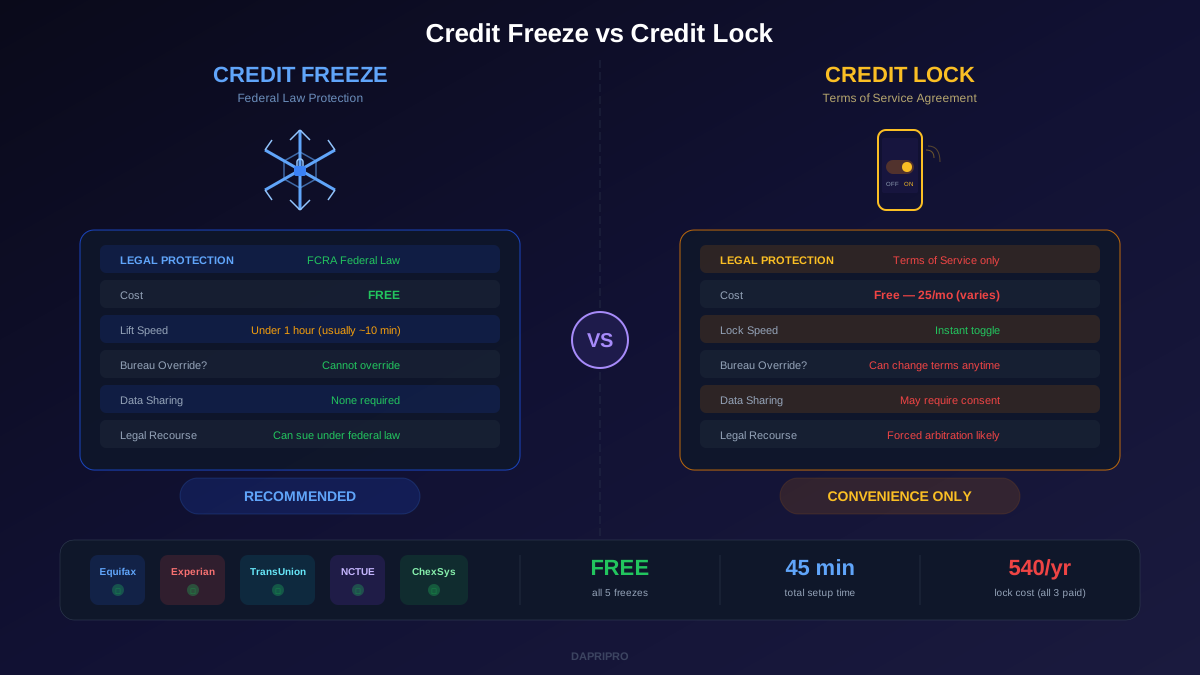
- You have already frozen your credit at all three bureaus
- You use a password manager with unique passwords everywhere
- You monitor your credit through Credit Karma (Equifax and TransUnion) and Experian's free tier
- You check annualcreditreport.com for your full reports regularly
- You are comfortable handling fraud disputes yourself if they arise
The Free DIY Protection Stack
If you decide against paying for a service, here is the free combination that covers the most ground:
- Credit freezes at all three bureaus (Equifax, Experian, TransUnion) — free, prevents new accounts from being opened
- Credit Karma — free monitoring of Equifax and TransUnion with alerts
- Experian free tier — free monitoring of Experian with basic dark web scanning
- HaveIBeenPwned — free notification service that alerts you when your email appears in new data breaches
- AnnualCreditReport.com — free weekly full credit reports from all three bureaus (permanent since 2020)
- IRS Identity Protection PIN — free, prevents someone from filing a tax return using your SSN
This stack provides solid basic coverage but lacks dark web monitoring depth, home title monitoring, financial account monitoring, restoration support, and insurance.
Our Verdict: Which Service Should You Choose?
- Best overall for families: Aura — broadest monitoring, best family plan, includes all the extras
- Best for device security bundle: LifeLock Norton 360 — if you also need antivirus, VPN, and cloud backup, the combined value is hard to beat
- Best budget option: Identity Guard Value — meaningful dark web monitoring at 9/month
- Best for worst-case scenarios: IDShield — if identity theft happens, having Licensed Private Investigators on your side makes a real difference
- Best free option: Experian IdentityWorks Free + Credit Karma — covers basic credit monitoring across all three bureaus at no cost
Remember: the best identity theft protection service is the one you actually respond to. Every service tested sends alerts — the 72% of identity theft damage that occurs in the first 48 hours happens because people ignore or delay acting on those alerts. Whichever service you choose, commit to immediate action when notifications arrive.
The Bottom Line
Identity theft protection services do not prevent identity theft. They are early warning systems that buy you time — and time is the most valuable resource when someone is using your identity. The difference between a 24-hour response and a 6-month discovery is the difference between a few phone calls and years of financial cleanup.
Pick a service that matches your risk profile and budget, freeze your credit at all three bureaus regardless, and treat every alert like the emergency it is. That combination — monitoring plus freezes plus fast response — is the closest thing to comprehensive identity theft protection that exists in 2026.