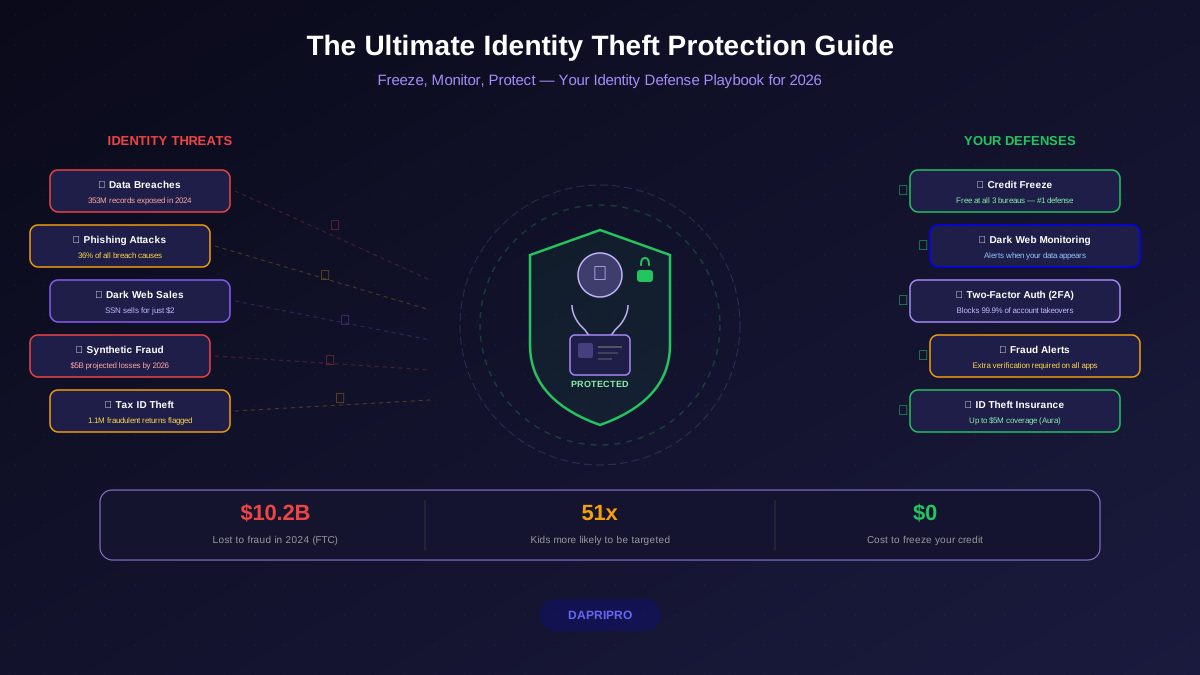

Somewhere right now, on a marketplace you cannot find through Google, a listing contains your email address, a password you used in 2019, and possibly your Social Security number. The seller is asking for less than the price of a coffee.
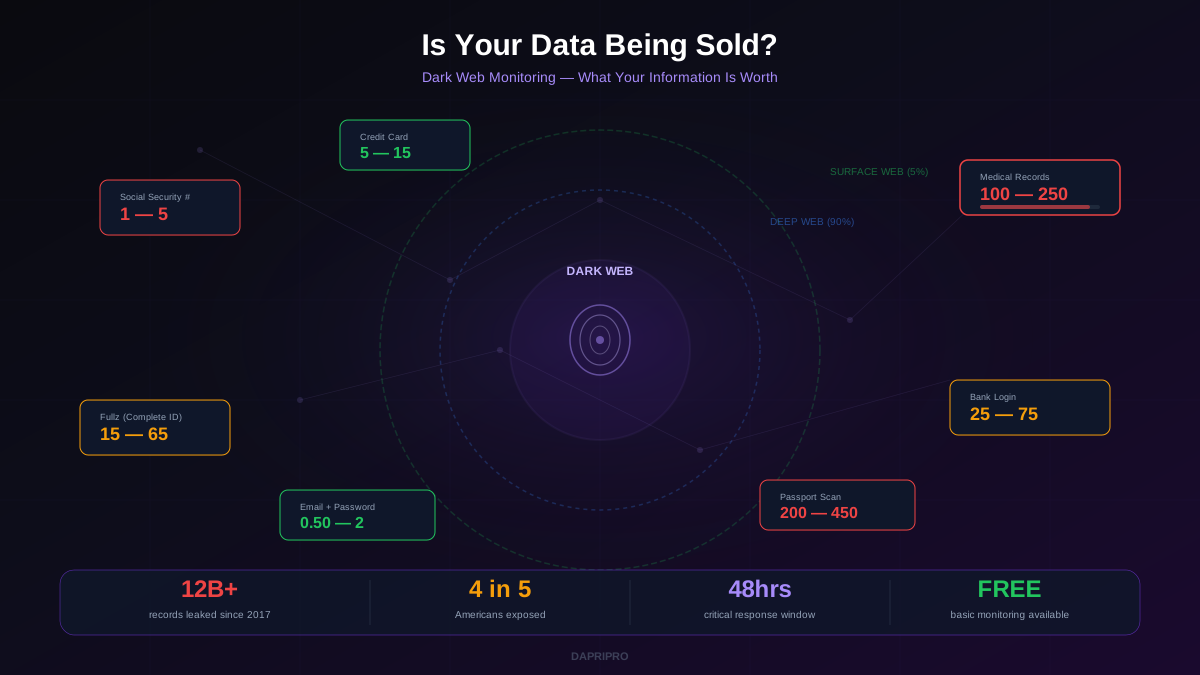
This is not hypothetical. Over 12 billion account records have been leaked in data breaches since 2017. If you have an email address, a social media account, or have shopped online, your data is almost certainly circulating on the dark web in some form. The question is not whether your data has been compromised — it is what has been compromised, and whether someone is actively using it.
Dark web monitoring services exist to answer that question. But they are widely misunderstood: they cannot prevent breaches, they cannot remove your data, and they cannot scan everywhere. Here is what they actually do, what they miss, and what you should do about it.
What the Dark Web Actually Is (and Is Not)
The internet has three layers:
Surface Web
Everything indexed by search engines — Google, Bing, DuckDuckGo. This is roughly 5% of all internet content. Websites, social media, news sites, and most online services live here.
Deep Web
Content that exists online but is not indexed by search engines — your email inbox, banking portal, medical records, subscription databases, corporate intranets. This accounts for roughly 90% of the internet. Most deep web content is perfectly legitimate.
Dark Web
A subset of the deep web intentionally hidden and accessible only through specialized software like Tor (The Onion Router). The dark web uses .onion domains that cannot be accessed through regular browsers. While it has legitimate uses (journalists communicating with sources, political dissidents in authoritarian countries), it also hosts marketplaces where stolen data, drugs, weapons, and hacking services are traded.
The dark web is not a single location. It is a fragmented ecosystem of:
- Marketplaces — eBay-like platforms for stolen data, with seller ratings and escrow services
- Forums — discussion boards where hackers trade techniques, share stolen databases, and recruit for operations
- Paste sites — anonymous text-sharing platforms where breached data dumps are posted for free
- Private Telegram channels — increasingly replacing dedicated dark web sites because they are easier to use and harder to take down
- Discord servers — used for real-time trading and sharing of stolen credentials
- Genesis-style bot markets — selling complete browser fingerprints including saved passwords, cookies, and session tokens
What Your Personal Data Is Worth on the Dark Web
Stolen data has a price hierarchy based on how much damage can be done with it:
Why Medical Records Are the Most Valuable
Medical records command the highest prices because they contain a combination of data that enables multiple fraud types simultaneously:
- Full name, date of birth, SSN, and address — enough for identity theft
- Insurance policy numbers — enables medical identity theft (receiving treatment under your insurance)
- Diagnostic codes and medication history — cannot be changed like a credit card number, making the data permanently useful
- Provider information — enables targeted phishing against healthcare workers
How Dark Web Monitoring Actually Works
Dark web monitoring services use a combination of automated and human intelligence methods:
Automated Scanning
Bots continuously crawl known dark web marketplaces, forums, paste sites, and data dump repositories, searching for specific data points you have registered — your email addresses, phone numbers, SSN, and financial account numbers. When a match is found, an alert is triggered.
Human Intelligence (HUMINT)
The best monitoring services supplement automated scanning with human analysts who infiltrate closed forums, private Telegram groups, and invitation-only marketplaces. These analysts build relationships within criminal communities to access data that automated bots cannot reach. Services like Aura and LifeLock employ teams of analysts specifically for this purpose.
Breach Database Correlation
When a new data breach is disclosed — either publicly or through dark web chatter — monitoring services cross-reference the breached database against their subscriber list. If your data appears in the breach, you receive an alert, often before the breached company sends their notification letter.
What Dark Web Monitoring Cannot Do
- Remove your data — once posted, data is replicated across multiple locations and cannot be deleted
- Scan everything — private channels, encrypted communications, and new marketplaces may not be covered
- Prevent breaches — monitoring is reactive, not preventive
- Guarantee real-time alerts — there is always a delay between data being posted and being discovered
- Detect use — monitoring finds your data listed for sale, but it cannot tell you if someone has already purchased and used it
Free Dark Web Monitoring Tools You Can Use Today
1. HaveIBeenPwned (haveibeenpwned.com)
Created by security researcher Troy Hunt, this is the most respected free breach notification service. Enter your email address and it instantly shows every known data breach that includes that email. You can also set up free email notifications for future breaches. It covers over 800 breached websites and 14 billion compromised accounts.
Limitation: Only searches for email addresses. Does not scan for SSN, phone numbers, or financial data.
2. Google One Dark Web Report
Available to anyone with a Google account. Scans for your name, email address, phone number, SSN, and date of birth across dark web sources. Displays results in a clear dashboard showing which data points were found and in which breaches.
Limitation: Limited to data Google has indexed. Does not cover private forums or Telegram channels.
3. Mozilla Monitor
Free email-based breach notification service powered by HaveIBeenPwned data. Sends alerts when your email appears in new breaches and provides recommendations on what to do.
Limitation: Email-only. The free tier shows breaches but does not provide SSN or financial monitoring.
4. Credit Karma Dark Web Monitoring
Included free with Credit Karma. Monitors for your SSN, email, and phone number on the dark web. Also provides free credit monitoring from Equifax and TransUnion.
Limitation: Less aggressive scanning than paid services. May miss data on newer or more obscure marketplaces.
Paid Dark Web Monitoring: What You Get for Your Money
Paid services differ from free tools in three main areas:
- Broader scanning scope — coverage extends to private forums, Telegram channels, and invitation-only marketplaces that free tools do not reach
- More data types monitored — SSN, medical IDs, driver license numbers, bank account numbers, investment accounts, passport numbers, and email addresses
- Action support — alerts come with specific remediation steps and access to identity restoration specialists who can act on your behalf
The top paid services for dark web monitoring specifically are Aura (broadest scanning with AI-powered alerts), LifeLock (fastest alert speed in our testing), and Identity Guard (Watson AI pattern analysis that correlates multiple data points). Prices range from 9 to 35 dollars per month depending on the service and coverage tier.
What to Do When Your Data Is Found on the Dark Web
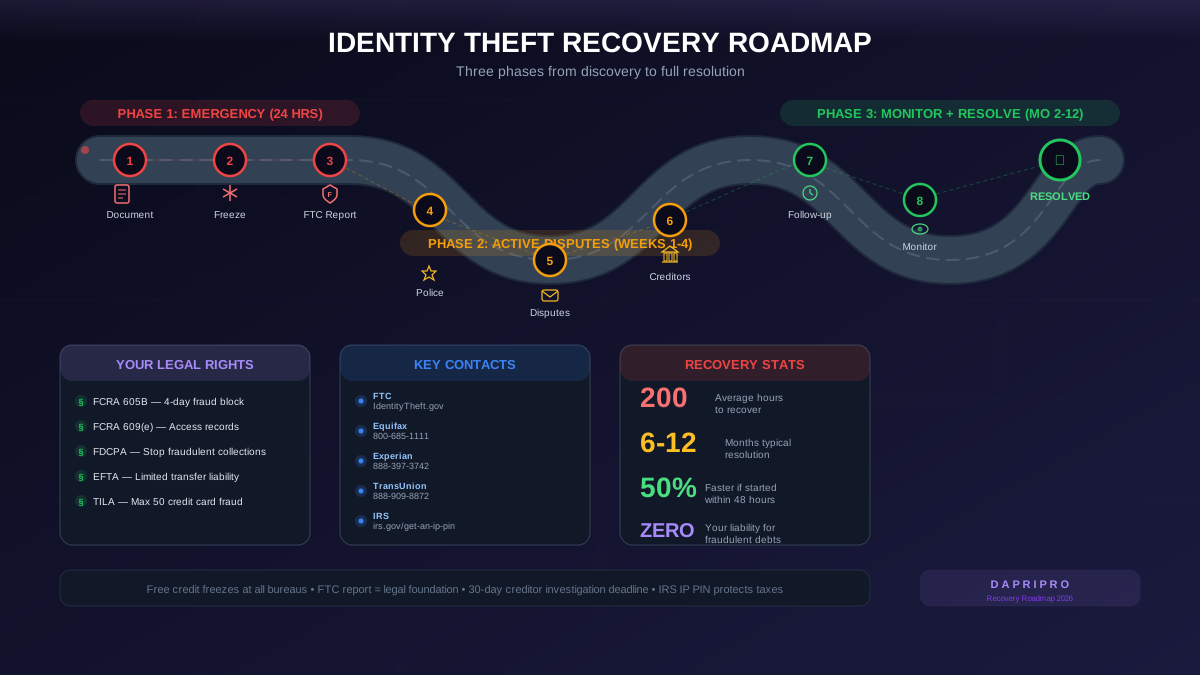
Discovery of your data on the dark web is not a reason to panic — but it is a reason to act within 24 hours. Here is the priority sequence:
Within the First 24 Hours
- Identify what was exposed — email and password only? SSN? Financial accounts? Your response depends on the data type
- Change compromised passwords immediately — and change them at every site where you reused that password (this is why password reuse is dangerous)
- Enable two-factor authentication — on every account that supports it, prioritizing email, banking, and social media
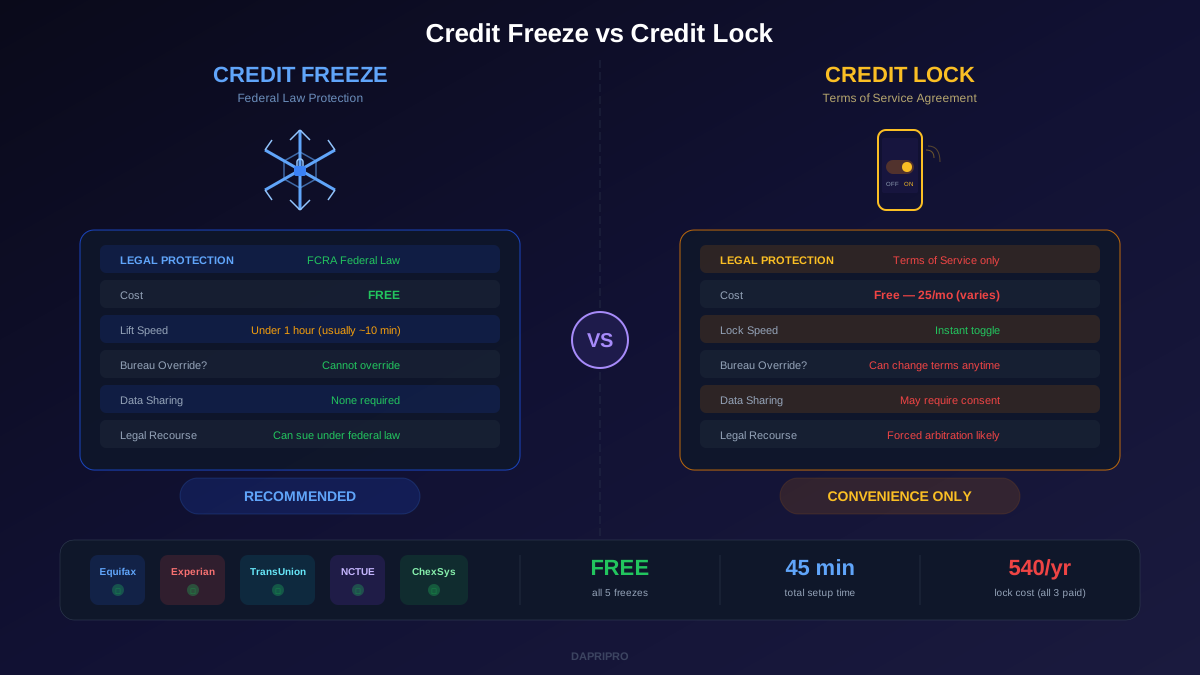
- Freeze your credit — at Equifax, Experian, and TransUnion if your SSN was exposed. This is the single most important defensive action
- Check your financial accounts — review recent transactions on all bank accounts, credit cards, and investment accounts for unauthorized activity
Within the First Week
- Request your free credit reports — go to annualcreditreport.com and check all three bureau reports for accounts or inquiries you do not recognize
- Set up fraud alerts — place an initial fraud alert at one bureau (it propagates to all three). This is less protective than a freeze but adds an extra layer
- File an identity theft report with the FTC — at identitytheft.gov. This creates a legal document you can use to dispute fraudulent accounts
- Notify your health insurance provider — if medical information was exposed, request a copy of your benefits statement to check for medical identity theft
- Consider an IRS Identity Protection PIN — if your SSN was exposed, apply for an IP PIN at irs.gov to prevent tax identity theft
Building Your Personal Dark Web Monitoring Stack
Whether you pay for monitoring or not, here is the optimal layered approach:
Free Layer (Everyone Should Do This)
- HaveIBeenPwned — register every email you use for breach notifications
- Google Dark Web Report — run a scan and set up ongoing monitoring
- Credit Karma — enable dark web monitoring and credit alerts
- Credit freezes — freeze at all three bureaus plus NCTUE and ChexSystems
- IRS Identity Protection PIN — apply at irs.gov
Paid Layer (For Higher-Risk Individuals)
Add a comprehensive identity theft protection service (Aura, LifeLock, or Identity Guard) that includes:
- SSN monitoring on the dark web
- Financial account monitoring
- Medical ID monitoring
- Home title monitoring
- Identity restoration support with dedicated case managers
- Insurance covering recovery expenses
Behavioral Layer (Most Important)
- Use unique passwords for every account (password manager required)
- Enable two-factor authentication everywhere possible (preferably hardware keys or authenticator apps, not SMS)
- Minimize data sharing — only provide your SSN when legally required
- Review financial statements monthly
- Shred physical documents containing personal information
- Opt out of data broker sites (use a service like DeleteMe or do it manually)
The Bottom Line
Your data is probably already on the dark web. That ship has sailed for most Americans. The relevant question now is whether you are monitoring for new exposures and positioned to respond quickly when they happen.
Dark web monitoring — whether free or paid — is a detection tool, not a prevention tool. It buys you the most valuable thing in identity theft defense: time. The faster you learn about a compromise, the faster you can freeze credit, change passwords, and lock down accounts before a criminal turns your stolen data into stolen money.
Start with the free tools today. They take less than 15 minutes to set up and cover the most common exposure types. If your risk profile warrants it, add a paid service for the deeper scanning and restoration support that free tools cannot provide. And regardless of which monitoring approach you choose, freeze your credit — it remains the single most effective action against new-account fraud.