
Picture this: a company collects your email address, tracks every website you visit, and sells that information to advertisers — all without ever telling you or asking your permission. Before 2018, this happened all the time. Then the General Data Protection Regulation (GDPR) changed everything.
The GDPR is Europe's groundbreaking data privacy law, and it is the most important piece of privacy legislation in the world. Since it took effect on May 25, 2018, regulators have issued over €4.5 billion in fines to companies that broke the rules — including a record €1.2 billion fine to Meta (Facebook's parent company) in 2023.
But here is the thing that surprises most people: GDPR does not just apply to European companies. If your website, app, or business collects any personal data from people in Europe — even just cookies or IP addresses — you must comply with GDPR. That means companies in the US, Asia, Africa, and everywhere else are covered.
This guide explains GDPR compliance in plain, simple language. Whether you are a student learning about data privacy, a small business owner, or someone who wants to understand your rights, you will find everything you need right here.
What Is GDPR? (The Simple Explanation)
The General Data Protection Regulation is a law that gives people in the European Union (EU) control over their personal data. Think of it like this: before GDPR, companies treated your data like it belonged to them. After GDPR, your data belongs to you, and companies need your permission to use it.
GDPR is built on a simple idea: people have a right to know what data is collected about them, why it is collected, and what happens to it. Companies must be transparent, keep data secure, and give people the power to say "stop" or "delete my data" at any time.
The 7 Core Principles of GDPR
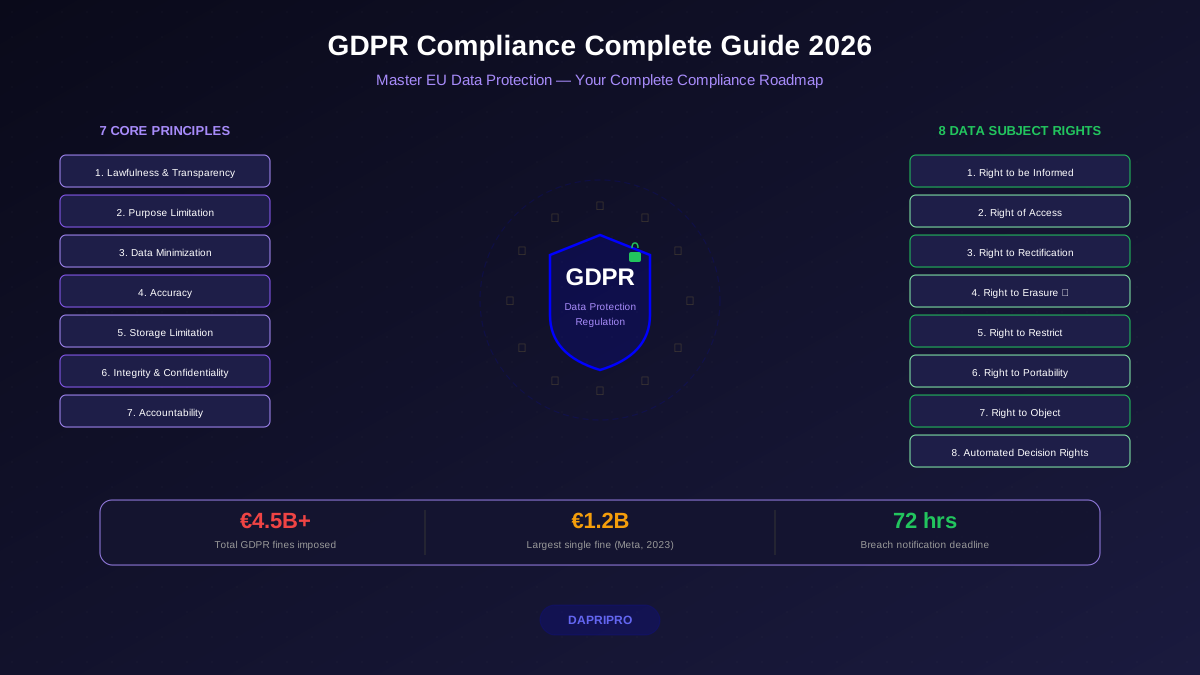
Every GDPR rule flows from these seven principles. Think of them as the "constitution" of data privacy:
- Lawfulness, Fairness, and Transparency — You must have a legal reason to collect data, treat people fairly, and be upfront about what you are doing.
- Purpose Limitation — Collect data only for specific purposes you have clearly stated. You cannot collect email addresses for a newsletter and then secretly use them for targeted ads.
- Data Minimization — Only collect the data you actually need. If you run an online store, you need a shipping address — but you do not need someone's birthday.
- Accuracy — Keep personal data accurate and up to date. If someone tells you their information has changed, fix it promptly.
- Storage Limitation — Do not keep data forever. Once you no longer need it for the original purpose, delete it.
- Integrity and Confidentiality — Keep data safe using appropriate security measures like encryption and access controls.
- Accountability — You must be able to demonstrate that you follow all of these principles. "Trust me" is not enough — you need documentation and proof.
Who Must Comply with GDPR?
GDPR has an extremely broad scope. You must comply if:
- Your organization is based in the EU/EEA (regardless of where you process data)
- You offer goods or services to people in the EU (even if your company is in the US, Canada, India, or anywhere else)
- You monitor the behavior of people in the EU (like tracking website visitors with analytics or cookies)
In practice, this means almost any website with European visitors needs to comply. If you use Google Analytics, have a cookie banner, accept payments from EU customers, or even just collect email addresses for a newsletter — GDPR applies to you.
Key Roles Under GDPR
| Role | Who They Are | Example |
|---|---|---|
| Data Subject | The person whose data is being collected | You — a website visitor, customer, or user |
| Data Controller | The organization that decides WHY and HOW to collect data | An online store that collects your address for shipping |
| Data Processor | A third party that processes data on behalf of the controller | A cloud hosting company that stores the store's customer data |
| Data Protection Officer (DPO) | The person responsible for overseeing GDPR compliance | A privacy expert hired to ensure the company follows the rules |
| Supervisory Authority | The government body that enforces GDPR in each EU country | Ireland's DPC (oversees Meta, Google), France's CNIL |
The 6 Lawful Bases for Processing Data
Under GDPR, you cannot just collect personal data because you want to. You need a lawful basis — a legal justification. There are exactly six, and you must identify which one applies before you start collecting data:
- Consent — The person has clearly agreed (opted in) to their data being used for a specific purpose. Consent must be freely given, specific, informed, and unambiguous. Pre-ticked boxes do NOT count.
- Contract — You need the data to fulfill a contract. For example, an online store needs your address to ship your order.
- Legal Obligation — You are required by law to process the data. For example, keeping employee tax records.
- Vital Interests — Processing is necessary to protect someone's life. This is rare — like a hospital needing medical data in an emergency.
- Public Interest — Processing is necessary for a task carried out in the public interest. Mostly used by government agencies.
- Legitimate Interest — You have a genuine business reason, AND the person's privacy rights do not override it. This is the most flexible basis but requires a careful balancing test.
Most websites rely on consent (for marketing emails, cookies, analytics) and legitimate interest (for fraud prevention, network security). You must document which lawful basis you use for each type of data processing.
The 8 Data Subject Rights (Your Privacy Superpowers)
GDPR gives every person in the EU powerful rights over their personal data. Think of these as your "privacy superpowers" — and companies must respect every single one:
- Right to be Informed — You must know what data is collected and why. Companies must have a clear, readable privacy policy.
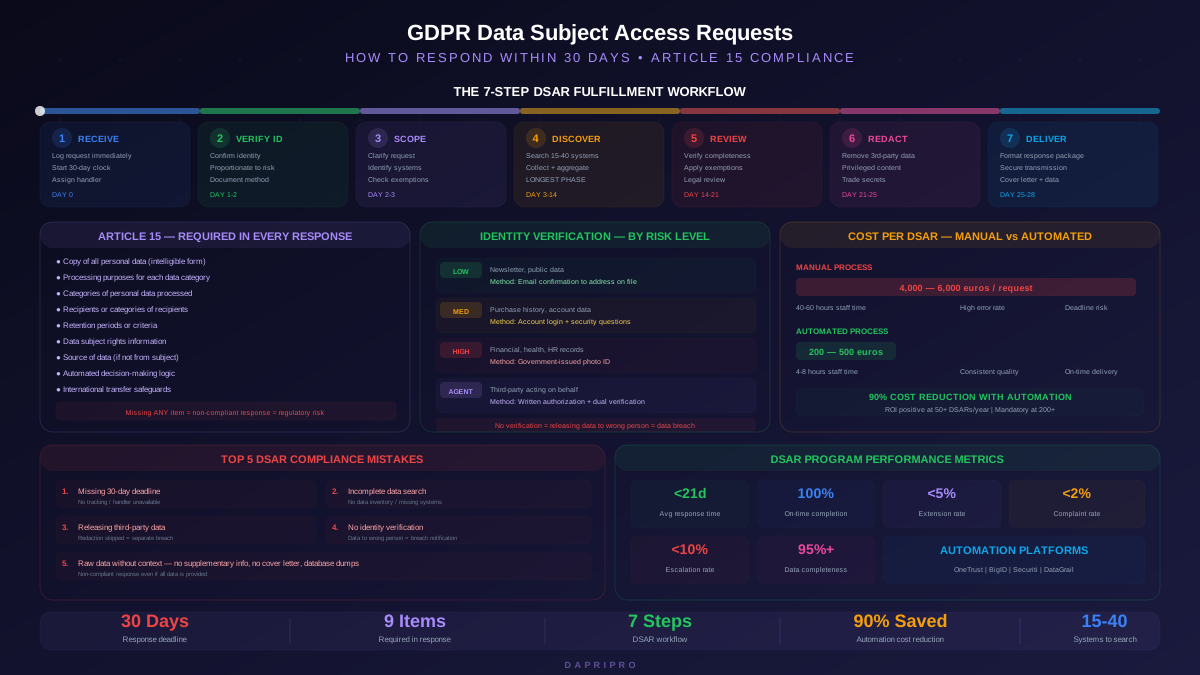
- Right of Access — You can ask any company to show you ALL the data they hold about you. They must respond within 30 days.
- Right to Rectification — If your data is wrong, you can demand they fix it.
- Right to Erasure — Also called the "right to be forgotten." You can ask a company to delete all your data (with some exceptions, like legal obligations).
- Right to Restrict Processing — You can tell a company to keep your data but stop using it while a dispute is resolved.
- Right to Data Portability — You can request your data in a common format (like CSV or JSON) and take it to a competitor.
- Right to Object — You can object to your data being used for direct marketing, profiling, or processing based on legitimate interest.
- Rights Related to Automated Decision-Making — If a computer algorithm makes decisions about you (like credit scoring), you have the right to human review.
When someone exercises any of these rights, the company has one month to respond. Failing to respond properly is itself a GDPR violation.
Getting Consent Right (Most Companies Get This Wrong)
Consent is one of the trickiest parts of GDPR compliance — and one of the most common reasons companies get fined. Here is what valid GDPR consent looks like:
Rules for Valid Consent
- ✅ Freely given — You cannot force consent as a condition of service (unless the data is genuinely needed for the service)
- ✅ Specific — Separate consent for each purpose (not one blanket checkbox for everything)
- ✅ Informed — People must know exactly what they are agreeing to before they agree
- ✅ Unambiguous — Requires a clear affirmative action (checking a box, clicking "I agree")
- ✅ Easy to withdraw — It must be as easy to remove consent as it was to give it
- ❌ Pre-ticked boxes — These do NOT count as valid consent
- ❌ Silence or inaction — "By continuing to use our site, you agree" is NOT valid consent
- ❌ Bundled consent — You cannot hide data collection consent inside terms of service
Cookie Consent Under GDPR
Cookie consent banners are one of the most visible parts of GDPR compliance. Here is what you need to know:
- Strictly necessary cookies (like shopping cart cookies) do NOT require consent
- Analytics cookies (like Google Analytics) DO require consent
- Marketing/tracking cookies (like Facebook Pixel) DO require consent
- Users must be able to reject all non-essential cookies as easily as accepting them
- You must provide granular choices — not just "Accept All" or "Reject All"
Data Protection Impact Assessments (DPIAs)
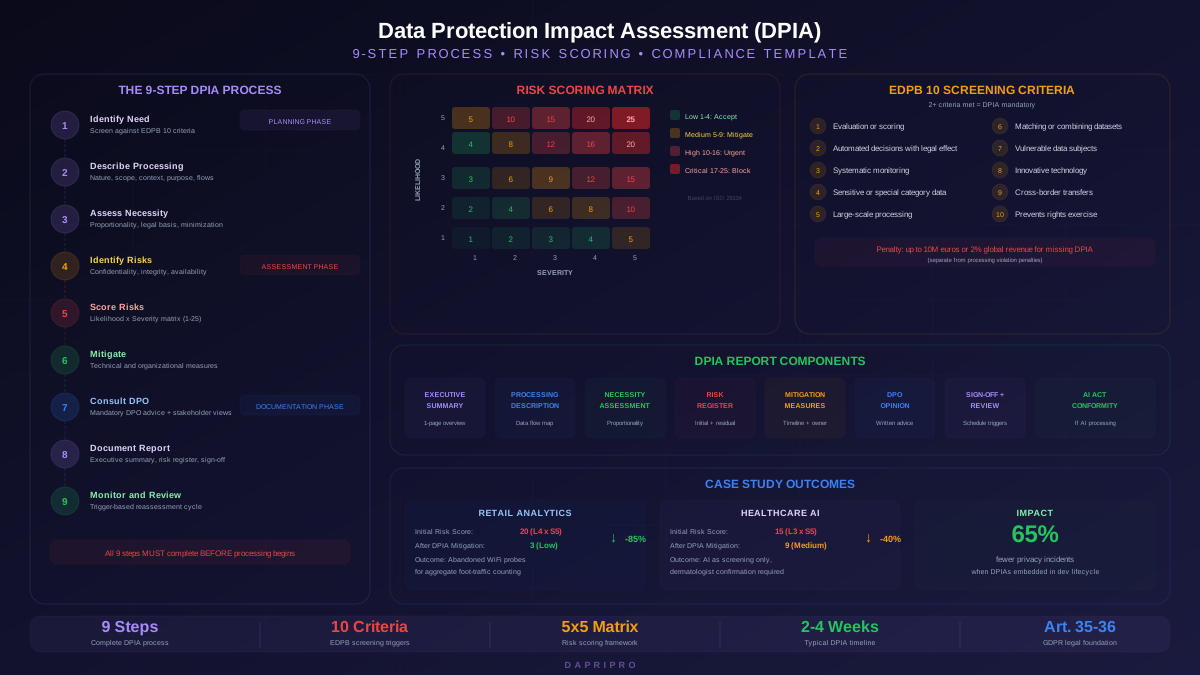
A Data Protection Impact Assessment (DPIA) is like a safety check you must do before starting any data processing activity that could be risky for people's privacy. Think of it like an environmental impact study, but for personal data.
You MUST do a DPIA when:
- Using new technology to process personal data (like AI or facial recognition)
- Profiling people in ways that significantly affect them (like credit scoring or automated hiring)
- Processing special category data (health, biometric, religious, political) on a large scale
- Systematically monitoring public areas (like CCTV surveillance)
- Processing children's data at scale
A DPIA must include: a description of the processing, assessment of necessity, evaluation of risks to data subjects, and measures you will take to reduce those risks.
GDPR Fines: The Real Consequences of Non-Compliance
GDPR has serious teeth. The fines can be enormous, which is what makes companies actually take it seriously:
Two Tiers of Fines
| Tier | Maximum Fine | Types of Violations |
|---|---|---|
| Lower Tier | €10 million or 2% of global revenue | Record-keeping failures, not notifying about breaches, not doing DPIAs, not appointing a DPO when required |
| Upper Tier | €20 million or 4% of global revenue | Violating data processing principles, not having lawful basis, violating data subject rights, illegal international transfers |
Biggest GDPR Fines in History
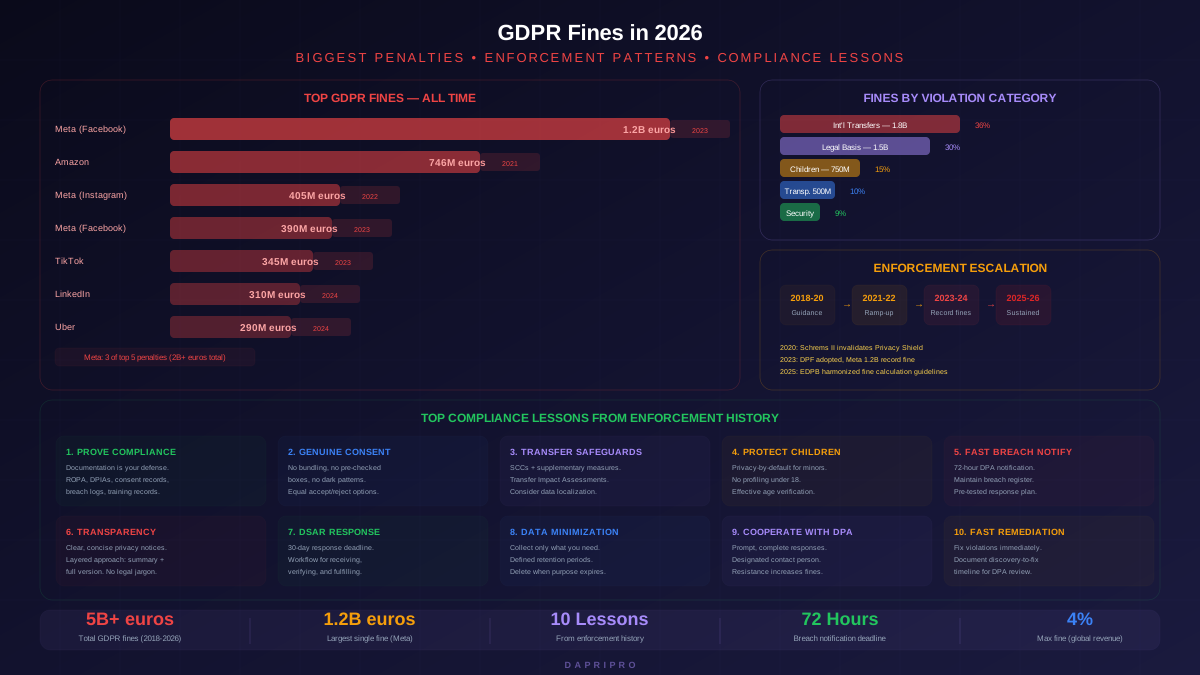
- Meta (Facebook) — €1.2 billion (2023) for illegally transferring EU user data to the US
- Amazon — €746 million (2021) for behavioral advertising without proper consent
- Instagram (Meta) — €405 million (2022) for mishandling children's personal data
- TikTok — €345 million (2023) for failing to protect children's privacy
- WhatsApp (Meta) — €225 million (2021) for not being transparent about data sharing
Notice a pattern? Companies that mishandle children's data get hit especially hard. GDPR requires extra protections for minors.
GDPR Compliance for Small Businesses
If you run a small business or website, GDPR compliance does not have to be overwhelming. Here is a practical checklist to get you started:
Essential GDPR Compliance Checklist
- ✅ Create a privacy policy that explains in plain language what data you collect, why, how you use it, and who you share it with
- ✅ Implement a proper cookie consent banner with equal accept/reject buttons and granular choices
- ✅ Identify your lawful basis for each type of data processing and document it
- ✅ Set up a process for handling data subject access requests within the 30-day deadline
- ✅ Keep a Record of Processing Activities (ROPA) — a document listing all your data processing activities
- ✅ Review third-party services — make sure every tool you use (like email marketing, analytics, CRM) has a Data Processing Agreement (DPA) in place
- ✅ Secure personal data with encryption, access controls, and regular backups
- ✅ Create a data breach response plan — you must notify the supervisory authority within 72 hours of discovering a breach
- ✅ Implement data deletion procedures — know how to delete someone's data when requested
- ✅ Train your team on GDPR basics so everyone understands their responsibilities
International Data Transfers Under GDPR
Transferring personal data outside the EU is one of the most complex areas of GDPR. The Schrems II ruling in 2020 invalidated the Privacy Shield framework that US companies relied on, creating enormous compliance headaches.
Currently, you can transfer data outside the EU using:
- Adequacy Decisions — The EU has decided certain countries have "adequate" data protection (like Canada, Japan, UK, and now the US under the new EU-US Data Privacy Framework)
- Standard Contractual Clauses (SCCs) — Pre-approved contract templates with extra safeguards
- Binding Corporate Rules (BCRs) — For multinational companies transferring data within their corporate group
- Explicit Consent — The individual specifically agrees to the transfer after being informed of the risks
Data Breach Notification Requirements
If you discover a personal data breach, GDPR requires you to act fast:
- Within 72 hours — Notify your supervisory authority (the data protection agency in the relevant EU country)
- "Without undue delay" — Notify affected individuals if the breach poses a high risk to their rights and freedoms
Your notification must include:
- Nature of the breach (what happened, how many people affected)
- Contact details of your DPO or point person
- Likely consequences of the breach
- Actions taken or proposed to address the breach
Failing to report a breach within 72 hours is itself a GDPR violation — even if the original breach was not your fault. Many companies have been fined specifically for reporting breaches too late.
Privacy by Design and Default
GDPR requires organizations to build privacy into everything from the start — not add it as an afterthought. This concept is called Privacy by Design. It means:
- New products, services, and systems must consider privacy from the very first design stage
- Default settings should be the most privacy-friendly option (Privacy by Default)
- Only data that is strictly necessary should be collected by default
- Data should be pseudonymized or encrypted wherever possible
For example, a social media app should default to "private" profiles rather than "public" ones. A registration form should not pre-tick the "subscribe to marketing emails" checkbox.
GDPR in 2026 and Beyond
GDPR continues to evolve. Key developments to watch in 2026:
- AI and GDPR tension — The EU AI Act (effective 2025-2026) intersects with GDPR on automated decision-making, biometric data, and AI training on personal data
- Increased enforcement — Fines are getting larger and regulators are becoming more aggressive, especially around children's data and ad-tech
- ePrivacy Regulation — The long-awaited companion to GDPR focusing specifically on electronic communications may finally be adopted
- Global influence — More countries are adopting GDPR-like laws (Brazil's LGPD, India's DPDP Act, Thailand's PDPA), making GDPR the de facto global standard
Start Your GDPR Compliance Journey Today
GDPR compliance might seem complex, but it comes down to one simple idea: treat people's data the way you would want your own data treated. Be transparent about what you collect. Keep it secure. Only collect what you need. And give people control over their own information.
Start with the essentials — a clear privacy policy, a proper cookie consent banner, and documented lawful bases for your data processing. From there, build up to a full compliance program with DPIAs, breach notification procedures, and a trained team.
Remember: GDPR is not just about avoiding fines. Companies that take data privacy seriously build stronger trust with their customers, create better products, and stand out in a world where privacy is becoming one of the most important values for consumers.
The question is not whether you can afford to comply with GDPR. It is whether you can afford not to.