
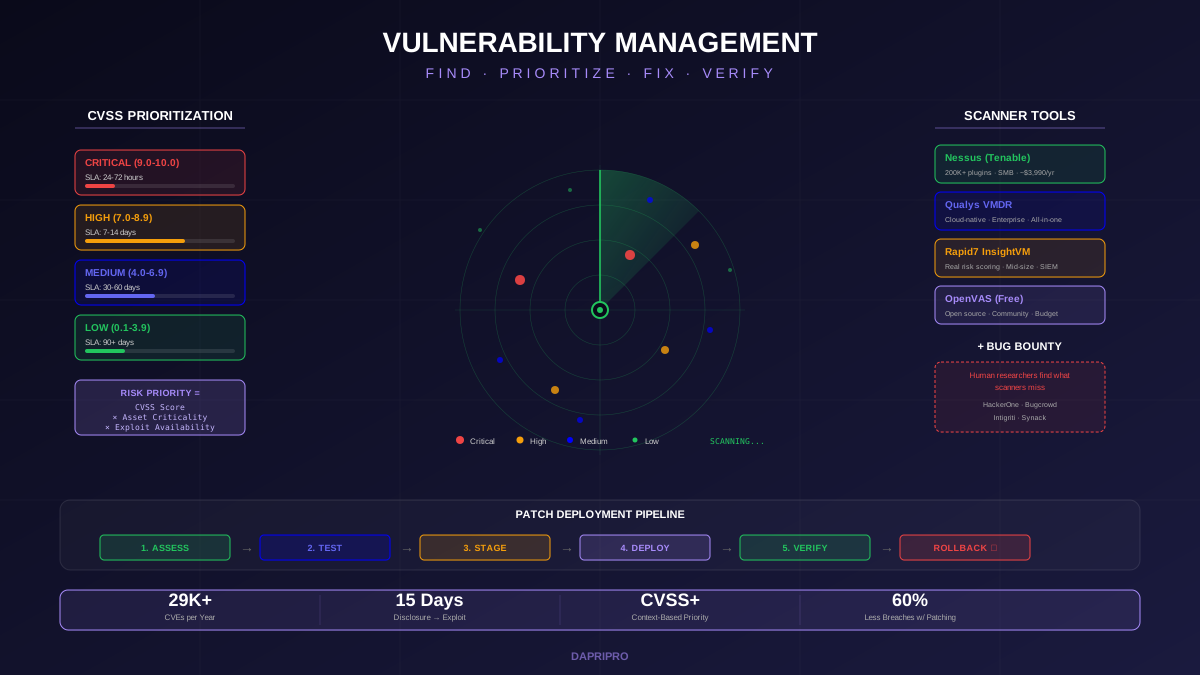
In 2025, the National Vulnerability Database published over 29,000 new CVEs — more than 80 new vulnerabilities every day. No organization can investigate and patch every single one. The organizations that get breached are not always the ones with the most vulnerabilities — they are the ones that fail to fix the right vulnerabilities in time.
Vulnerability management is the discipline of continuously finding, prioritizing, and fixing security weaknesses before attackers exploit them. This guide covers the complete vulnerability management lifecycle from scanning to patch management, with practical comparisons of the tools and techniques that work in 2026.
The Vulnerability Management Lifecycle
CVSS Scoring: Prioritizing What Matters
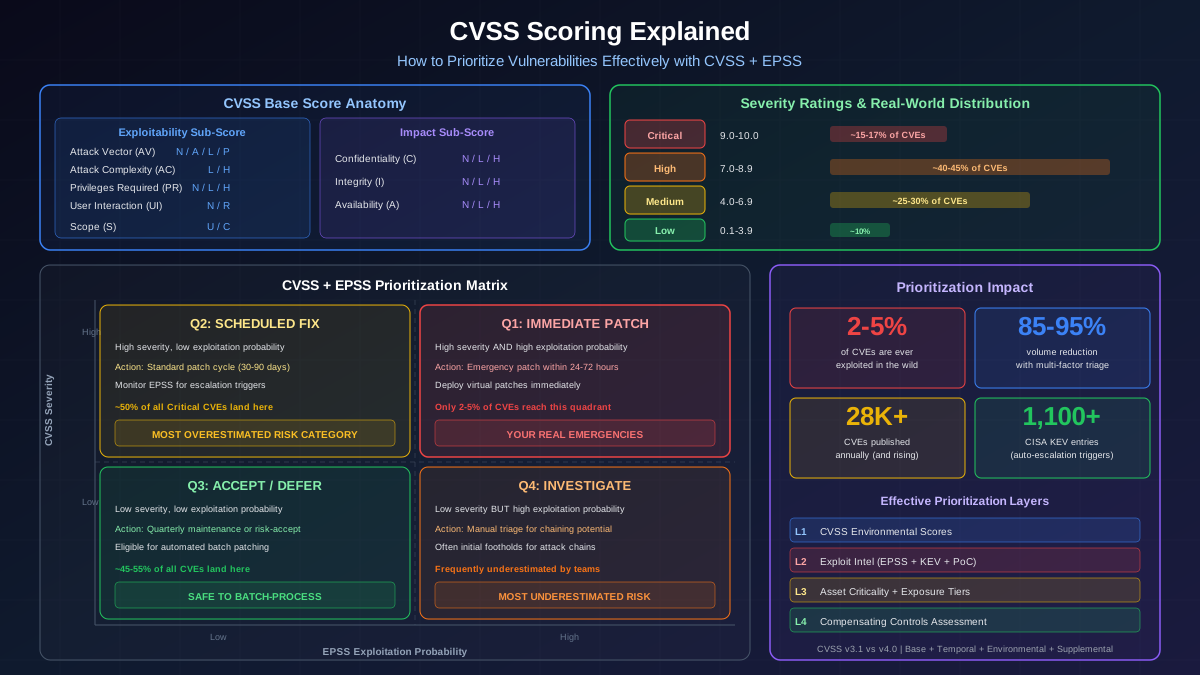
CVSS (Common Vulnerability Scoring System) rates vulnerabilities from 0.0 to 10.0 based on how easy they are to exploit and how much damage they can cause:
| CVSS Score | Severity | Recommended SLA | Example |
|---|---|---|---|
| 9.0-10.0 | Critical | 24-72 hours | Remote code execution, no authentication required |
| 7.0-8.9 | High | 7-14 days | Privilege escalation, data exposure |
| 4.0-6.9 | Medium | 30-60 days | Cross-site scripting, information disclosure |
| 0.1-3.9 | Low | 90+ days | Minor information leakage, configuration issues |
Why CVSS Alone Is Not Enough
CVSS measures the inherent severity of a vulnerability — not the risk to YOUR specific organization. Effective prioritization combines three factors:
- CVSS score — the technical severity of the vulnerability.
- Asset criticality — a vulnerability on your payment processing server is more important than the same vulnerability on a developer's test VM.
- Exploit availability — is this vulnerability being actively exploited in the wild? Check CISA's Known Exploited Vulnerabilities (KEV) catalog and Exploit-DB. A CVSS 7.0 with a public exploit is more urgent than a CVSS 9.0 with no known exploit.
Vulnerability Scanner Comparison
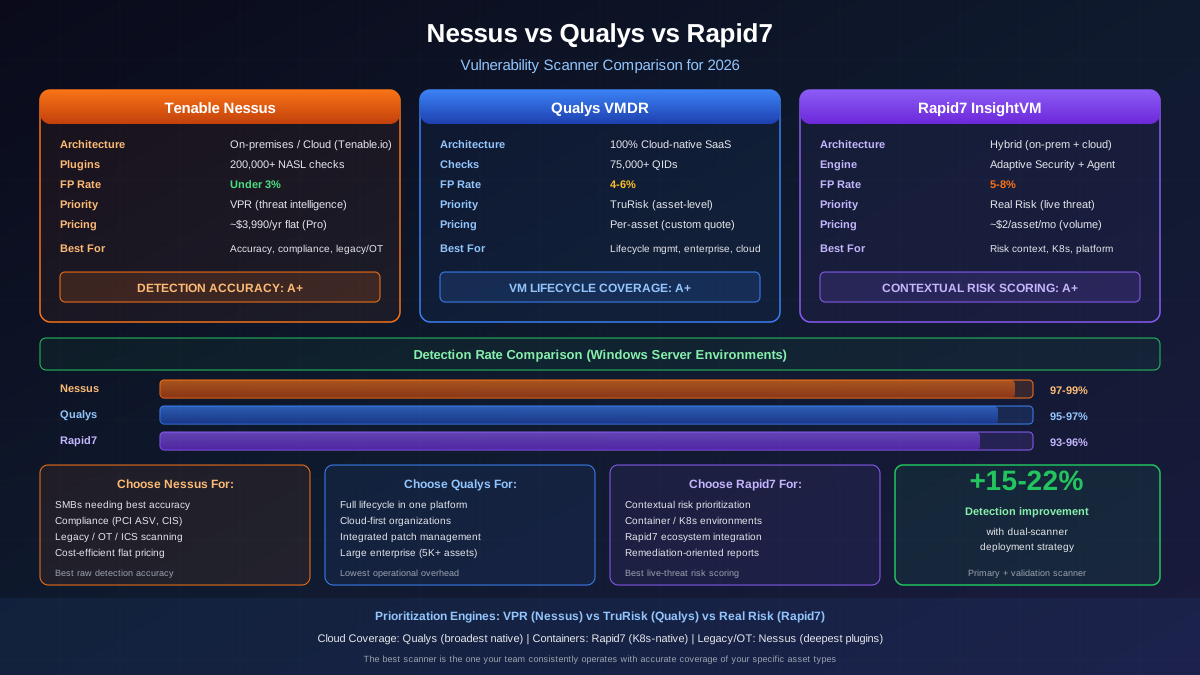
Choosing the right vulnerability scanner depends on your organization's size, infrastructure, and budget:
| Feature | Nessus (Tenable) | Qualys VMDR | Rapid7 InsightVM |
|---|---|---|---|
| Best For | SMBs, security teams | Large enterprises, cloud-first | Mid-size, risk-focused |
| Deployment | On-prem + cloud | Cloud-native | Cloud + on-prem agents |
| Pricing | ~$3,990/year | Quote-based (higher) | Quote-based (mid-range) |
| Key Strength | Largest plugin library (200K+) | Built-in asset inventory + patching | Real risk scoring with exploitability |
| Agent-Based | Yes (Nessus Agent) | Yes (Cloud Agent) | Yes (Insight Agent) |
| API Quality | Good | Excellent | Good |
| Free Option | Nessus Essentials (16 IPs) | Community Edition (limited) | InsightConnect free tier |
For budget-conscious organizations, OpenVAS (now Greenbone) provides a free, open-source vulnerability scanner with detection coverage comparable to commercial options.
Patch Management Best Practices
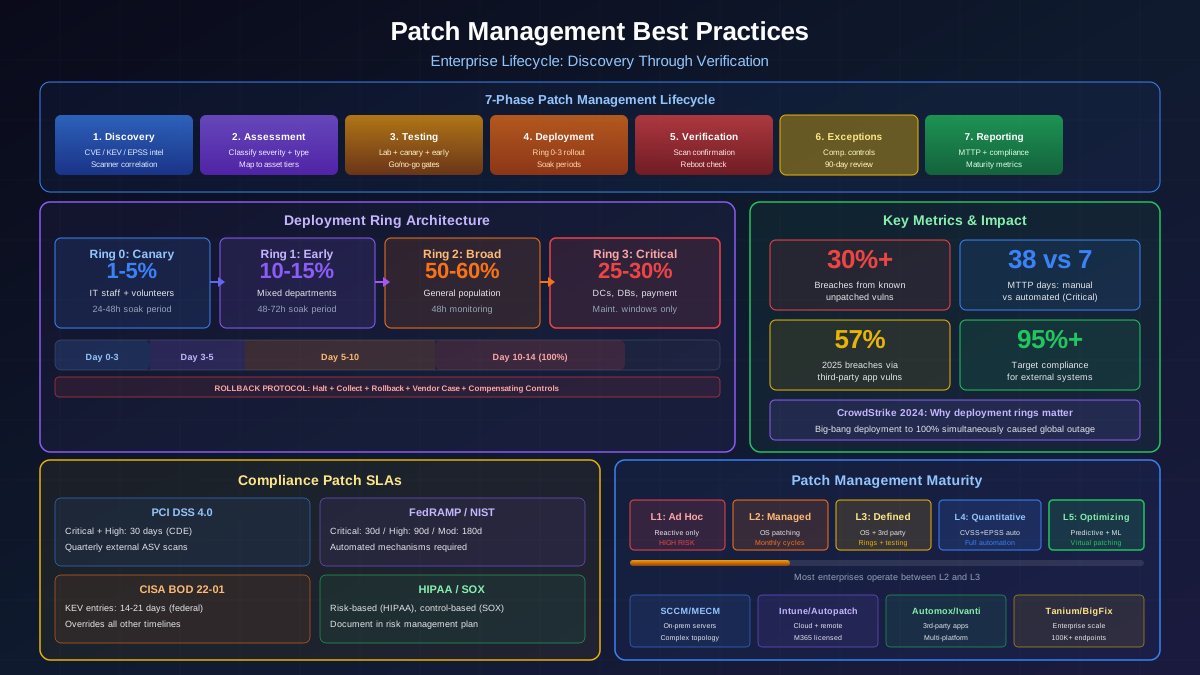
Patch management is where vulnerability management meets reality. Finding vulnerabilities is the easy part — deploying patches across hundreds or thousands of systems without breaking applications is the hard part.
Patch Deployment Workflow
- Assessment — evaluate the patch: what does it fix? What systems are affected? Are there known compatibility issues?
- Testing — deploy the patch to a test environment that mirrors production. Run application smoke tests. Check for regressions.
- Staging — deploy to a small group of production systems (canary deployment). Monitor for 24-48 hours.
- Production rollout — deploy to all remaining systems in waves. Use maintenance windows for critical systems. Track deployment completion.
- Verification — re-scan patched systems to confirm the vulnerability is resolved. Update your vulnerability tracking.
- Rollback plan — if the patch causes problems, have a tested rollback procedure ready. Document the decision to defer and the compensating controls applied.
Zero-Day Vulnerabilities
Zero-day vulnerabilities are flaws that have no available patch because the vendor does not know about them yet. They are the most dangerous because signature-based detection cannot catch what it does not know exists.
Since you cannot patch a zero-day, defense relies on:
- Virtual patching — WAF rules and IPS signatures that block the specific attack pattern without modifying the vulnerable software.
- Behavior-based detection — EDR and XDR solutions that detect suspicious behavior (unusual process creation, memory injection, privilege escalation) regardless of the specific vulnerability being exploited.
- Network segmentation — limit what a compromised system can access, so even if a zero-day is exploited, the attacker cannot reach critical data.
- Least privilege — run applications with minimal permissions. If a web server process only has read access to its own files, a zero-day exploit gains limited access.
Attack Surface Management
Attack surface management (ASM) continuously discovers and monitors all internet-facing assets that could be exploited by attackers. This is critical because organizations often have assets they have forgotten about:
- Shadow IT — cloud resources created by departments without IT approval.
- Forgotten subdomains — old staging or test environments that are still publicly accessible.
- Acquired company infrastructure — systems from mergers or acquisitions that were never properly inventoried.
- Third-party services — SaaS applications, marketing platforms, and development tools with company data.
Bug Bounty Programs
Bug bounty programs pay ethical hackers to find and report vulnerabilities in your systems. They complement automated scanning by finding logic flaws, business logic vulnerabilities, and complex attack chains that scanners cannot detect.
| Platform | Best For | Researcher Pool |
|---|---|---|
| HackerOne | Large organizations, government | 1M+ researchers worldwide |
| Bugcrowd | Mid-size organizations | 500K+ researchers |
| Intigriti | European companies (GDPR-focused) | 70K+ researchers |
| Synack | Enterprises needing vetted researchers | Pre-vetted, curated teams |
Start with a Vulnerability Disclosure Program (VDP) — a free, public channel for anyone to report vulnerabilities — before investing in a paid bug bounty program.
Measuring Vulnerability Management Success
Track these key metrics to measure and improve your program:
- Mean Time to Remediate (MTTR) — how many days from vulnerability discovery to patch deployment. Target: critical vulnerabilities under 7 days.
- SLA compliance rate — percentage of vulnerabilities patched within their severity-based SLA. Target: 90%+.
- Scan coverage — percentage of assets being scanned regularly. Target: 95%+ of all assets.
- Vulnerability density — number of open vulnerabilities per asset. Tracks whether you are making progress or falling behind.
- Reopen rate — percentage of vulnerabilities that reappear after being marked as fixed. A high rate indicates ineffective patching.
Build a Mature VM Program
Effective vulnerability management is not about finding the most vulnerabilities — it is about fixing the right ones fast enough. Start with comprehensive asset discovery so you know what to scan. Use CVSS combined with asset criticality and exploit availability to prioritize. Set severity-based SLAs and track compliance. And complement scanner results with attack surface management and bug bounty programs to catch what automated tools miss.
The organizations that do not get breached through known vulnerabilities are the ones that have made patching a disciplined, measured, continuous process — not a quarterly fire drill.