
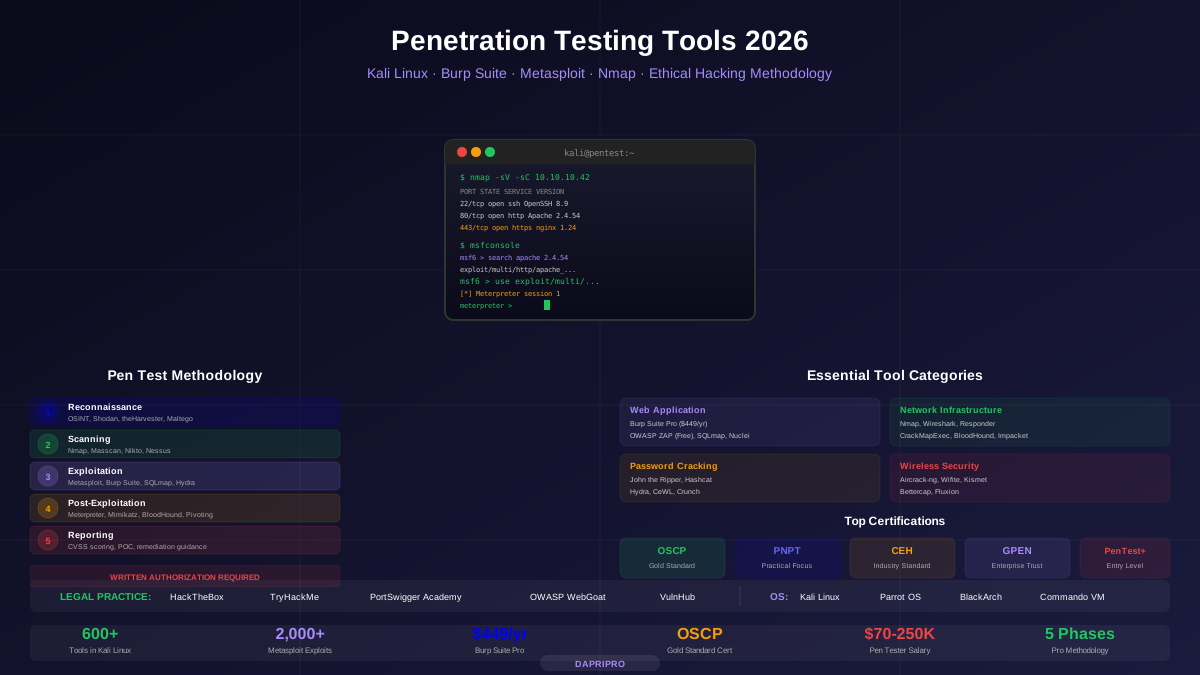
Penetration testing is the art of thinking like an attacker to defend like a pro. By finding vulnerabilities in your systems BEFORE criminals do, you can fix them on your terms, not theirs. This guide covers every essential tool in the modern pen tester's toolkit.
Legal warning: Every tool in this guide can be used for both authorized security testing and illegal hacking. The difference is written permission. Never use these tools against systems you do not own or have explicit authorization to test.
The 5-Phase Pen Testing Methodology
Kali Linux — The Pen Tester's Operating System
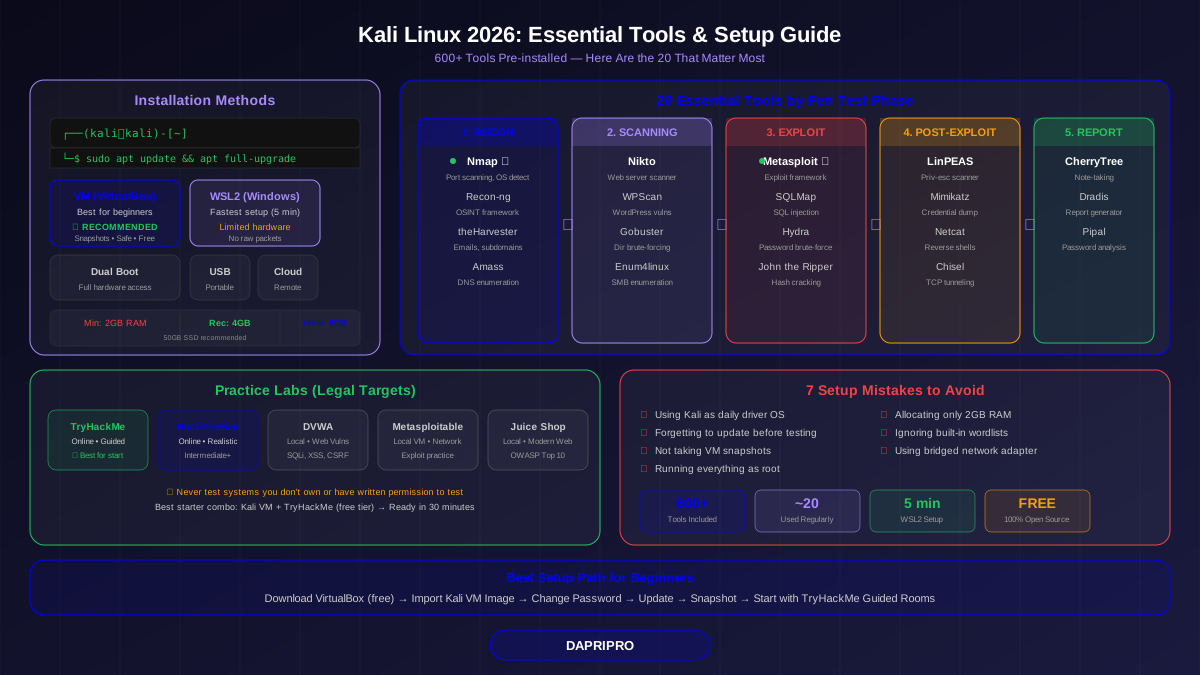
Kali Linux is a Debian-based operating system built specifically for penetration testing. It comes pre-installed with 600+ security tools organized by category: information gathering, vulnerability analysis, web applications, password attacks, wireless attacks, exploitation, forensics, and reporting.
Why Kali matters: Instead of manually installing and configuring dozens of tools, Kali gives you a ready-to-use testing environment. Boot from USB, run from a virtual machine, or install on dedicated hardware.
Essential Kali tools by phase:
- Reconnaissance: theHarvester (email/subdomain gathering), Recon-ng (OSINT framework), Maltego (visual link analysis), Shodan CLI (internet-connected device search).
- Scanning: Nmap (port scanning and service detection), Masscan (high-speed port scanning), Nikto (web server vulnerability scanner), enum4linux (Windows/SMB enumeration).
- Exploitation: Metasploit Framework, SQLmap (SQL injection automation), Hydra (password brute-forcing), John the Ripper and Hashcat (password hash cracking).
- Wireless: Aircrack-ng (Wi-Fi security testing), Wifite (automated wireless attacks), Kismet (wireless network detector).
Web Application Testing
Web application testing requires specialized tools because web apps communicate over HTTP/HTTPS with complex request/response patterns that network tools cannot analyze:
| Tool | Type | Cost | Best For |
|---|---|---|---|
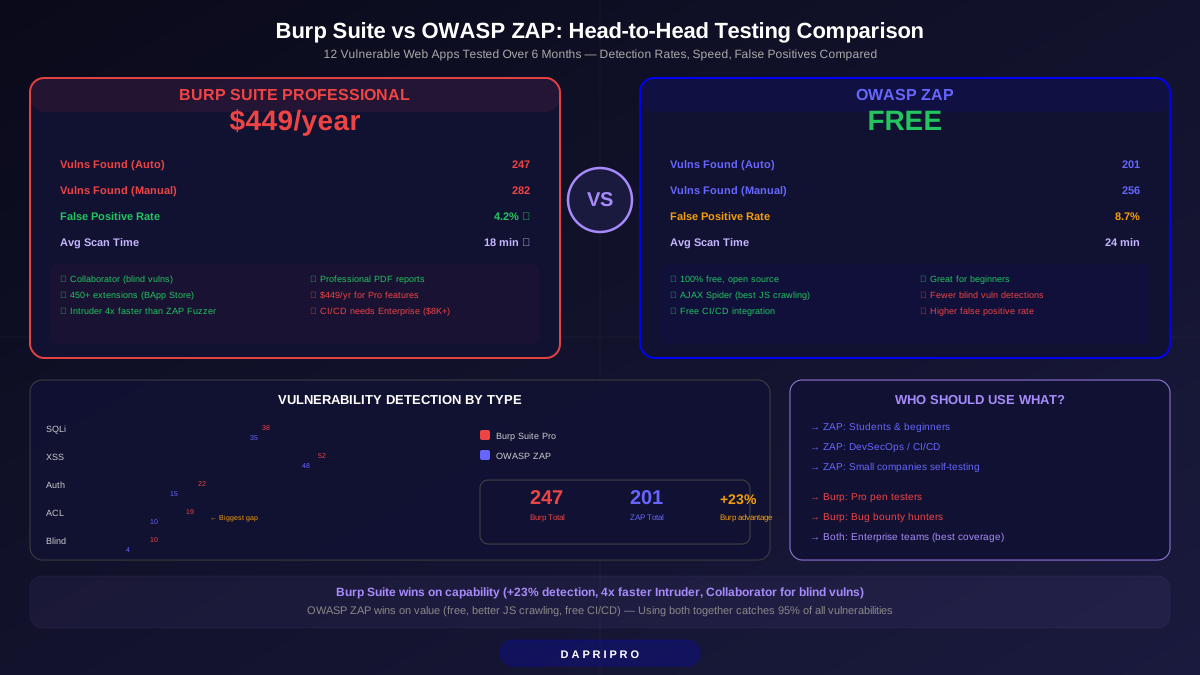
| Burp Suite Professional | Intercepting proxy + scanner | $449/year | Complete web app testing (industry standard) |
| OWASP ZAP | Intercepting proxy + scanner | Free (open source) | Best free alternative to Burp Suite |
| SQLmap | SQL injection automation | Free (open source) | Detecting and exploiting SQL injection flaws |
| Nuclei | Template-based scanner | Free (open source) | Fast scanning with community-contributed templates |
| ffuf | Web fuzzer | Free (open source) | Directory brute-forcing and parameter fuzzing |
Metasploit Framework — The Exploitation Engine
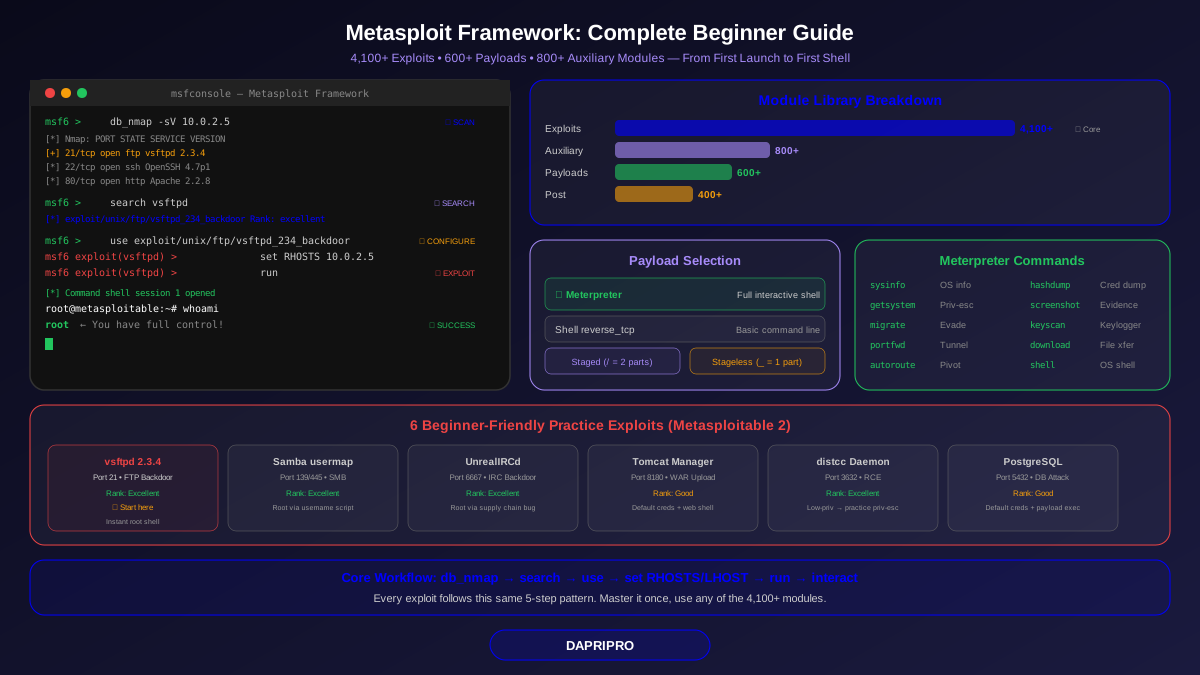
Metasploit is the world's most widely used penetration testing framework. It contains a database of 2,000+ pre-built exploits, 500+ payloads (code that runs after a successful exploit), and auxiliary modules for scanning, fuzzing, and sniffing.
How Metasploit works (simplified):
- Select an exploit — choose a module targeting a specific vulnerability (e.g., MS17-010 EternalBlue for unpatched Windows SMB).
- Configure options — set the target IP address, port, and any exploit-specific parameters.
- Select a payload — choose what happens after successful exploitation. Meterpreter is the most popular payload, providing a full interactive shell with file system access, screenshot capture, keylogging, and lateral movement capabilities.
- Execute — run the exploit. If the target is vulnerable, you gain access at the privilege level of the exploited service.
- Post-exploitation — use the access to demonstrate impact: access sensitive data, move laterally to other systems, escalate privileges.
Network Penetration Testing
Network pen testing targets the infrastructure layer: routers, switches, firewalls, servers, Active Directory, and the protocols connecting them.
| Tool | Purpose | Key Capability |
|---|---|---|
| Nmap | Port scanning and service detection | Discovers open ports, identifies services and OS versions, runs NSE scripts |
| Wireshark | Packet capture and analysis | Captures and decodes network traffic at the protocol level |
| Responder | LLMNR/NBT-NS poisoning | Captures NTLMv2 hashes from Windows networks |
| CrackMapExec | Active Directory testing | Post-exploitation and lateral movement in Windows/AD environments |
| BloodHound | AD attack path mapping | Visualizes attack paths to Domain Admin through AD relationships |
| Impacket | Network protocol tools | Python implementations of SMB, WMI, Kerberos for testing |
AI in Penetration Testing
AI-powered pen testing tools have emerged as a supplement to — not replacement for — human testers:
Pen Testing Certifications
| Certification | Provider | Exam Format | Difficulty | Industry Value |
|---|---|---|---|---|
| OSCP | Offensive Security | 24-hour hands-on lab exam | Hard | Gold standard for pen testers |
| PNPT | TCM Security | 5-day practical + report | Medium | Growing recognition, practical focus |
| CEH | EC-Council | Multiple choice (4 hours) | Medium | Widely recognized, HR-friendly |
| GPEN | SANS/GIAC | Proctored exam (3 hours) | Medium-Hard | Highly respected in enterprise |
| CompTIA PenTest+ | CompTIA | Multiple choice + performance | Medium | Good entry-level, DoD approved |
Where to Practice Legally
Never practice on systems you do not own. These platforms provide legal, intentionally vulnerable environments:
- HackTheBox — the most popular platform. Retired and active machines across all difficulty levels. Pro subscription ($14/month) unlocks retired machines and guided learning paths.
- TryHackMe — beginner-friendly, structured learning rooms with step-by-step guides. Better than HackTheBox for absolute beginners.
- PortSwigger Web Security Academy — free, comprehensive web application security training from the makers of Burp Suite. Covers all OWACP Top 10 categories with interactive labs.
- OWASP WebGoat — intentionally vulnerable web application you run locally. Teaches web vulnerabilities hands-on.
- VulnHub — downloadable vulnerable virtual machines for offline practice.
Our Verdict
Essential toolkit: Kali Linux (OS) + Nmap (scanning) + Burp Suite (web testing) + Metasploit (exploitation) + Wireshark (packet analysis). Best free tools: OWASP ZAP, Nmap, Metasploit Framework, SQLmap, Nuclei. Worth paying for: Burp Suite Professional ($449/year) — the investment pays for itself on the first real engagement. Best certification: OSCP for career credibility, PNPT for practical skills at lower cost. Best learning path: TryHackMe (beginner) to HackTheBox (intermediate) to OSCP prep (advanced).