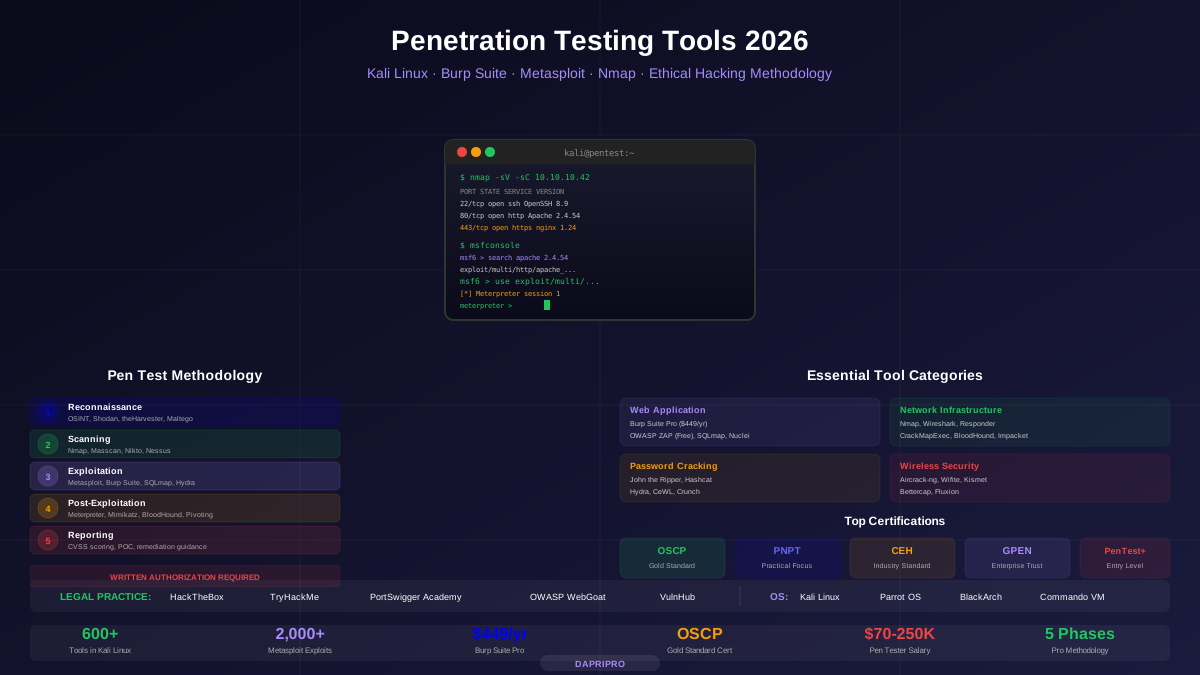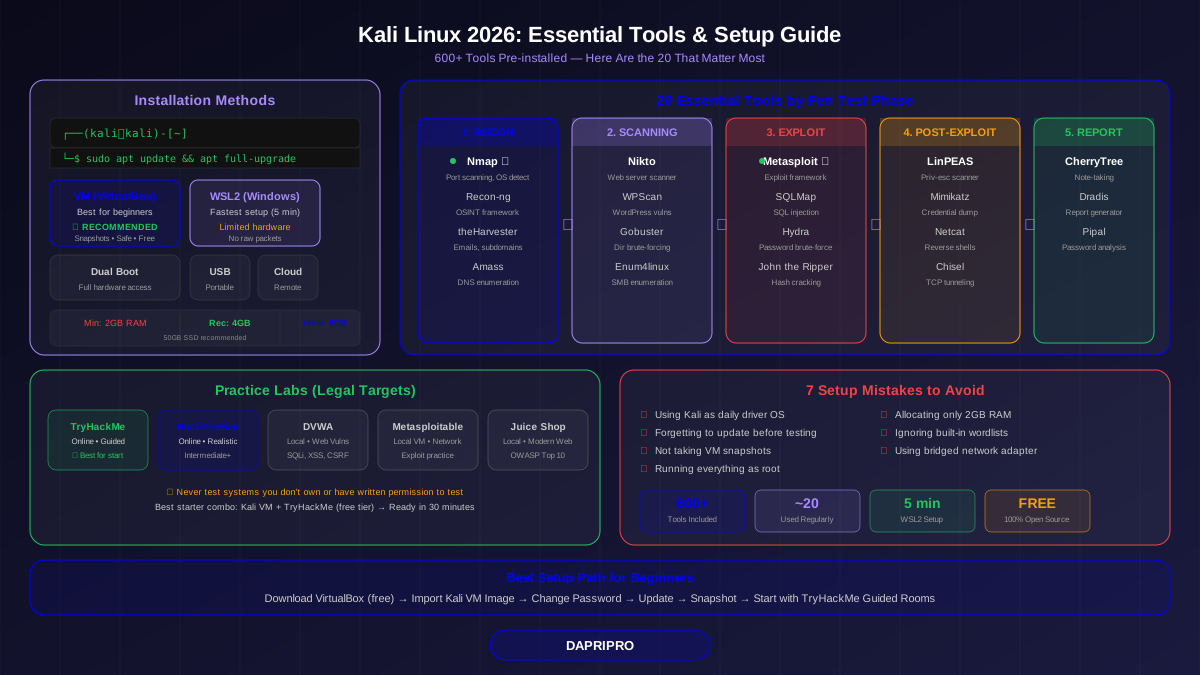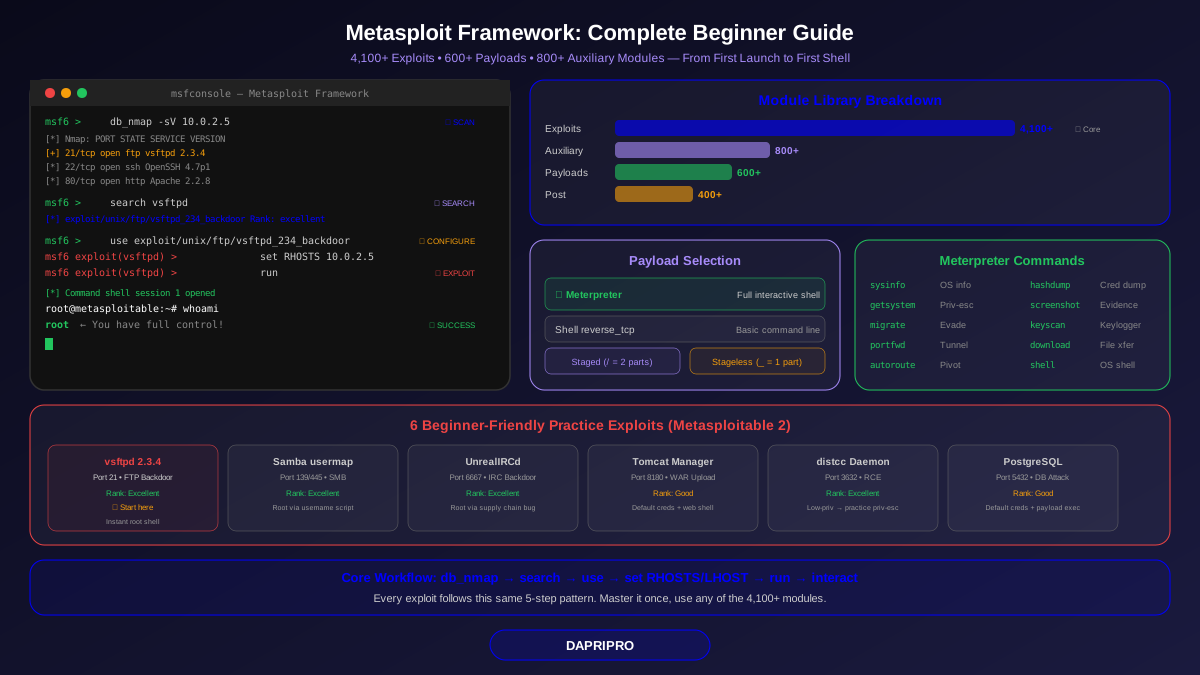

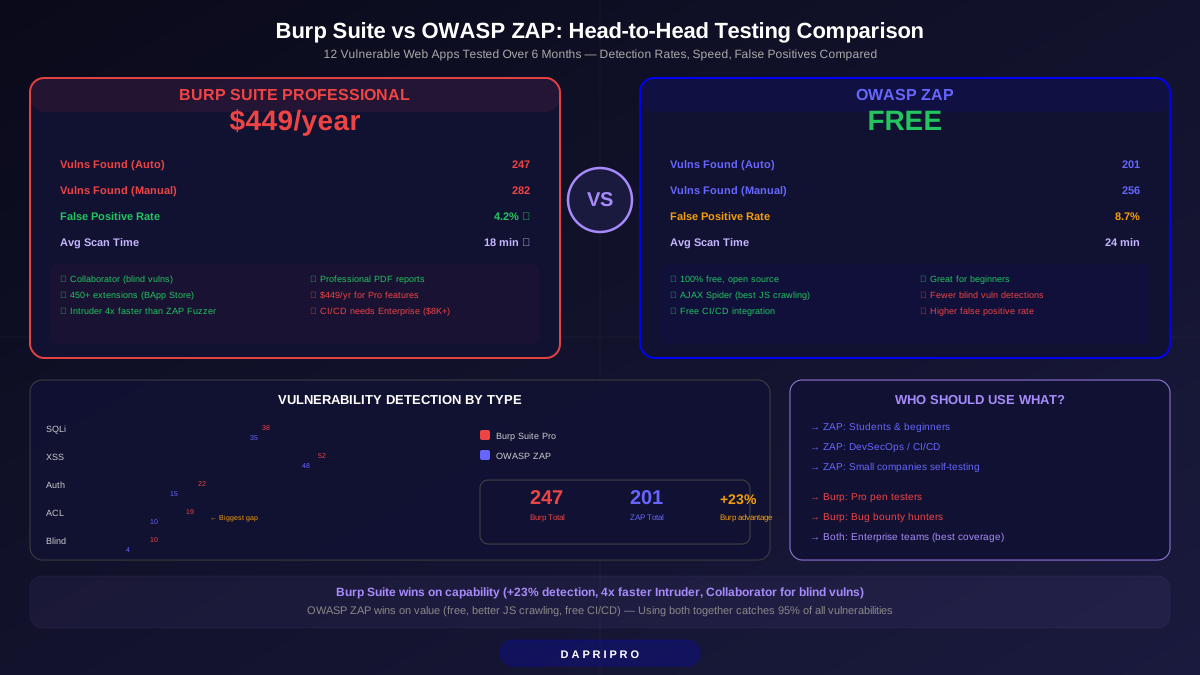
If you test web applications for security, you have probably heard this debate a hundred times: Burp Suite or OWASP ZAP? One costs $449 a year. The other is completely free. But is the free one actually good enough?
We stopped guessing and ran both tools against the same 12 vulnerable web applications for 6 months. We counted every vulnerability found, measured scanning speed, compared ease of use, and tracked real-world effectiveness. Here are the actual results — not opinions, but numbers.
Quick Comparison: Burp Suite vs ZAP at a Glance
| Feature | Burp Suite Professional | OWASP ZAP | Winner |
|---|---|---|---|
| Price | $449/year | Free (open source) | ZAP |
| Vulnerabilities found (auto) | 247 | 201 | Burp (+23%) |
| Vulnerabilities found (manual) | 282 | 256 | Burp (+10%) |
| False positive rate | 4.2% | 8.7% | Burp |
| Scan speed (avg per app) | 18 min | 24 min | Burp |
| JavaScript crawling | Good (with extension) | Excellent (AJAX Spider) | ZAP |
| Extensions available | 450+ (BApp Store) | 280+ (Marketplace) | Burp |
| Blind vulnerability detection | ✅ Burp Collaborator | ⚠️ Limited (OAST plugin) | Burp |
| Learning curve | Steep | Moderate | ZAP |
| CI/CD integration | Enterprise only ($8,395+) | ✅ Built-in (free) | ZAP |
| Report quality | Professional PDF/HTML | Good HTML/JSON/XML | Burp |
| API testing | ✅ Excellent | ✅ Good (OpenAPI import) | Burp |
How We Tested Both Tools
We set up 12 vulnerable web applications covering different tech stacks and vulnerability types:
- DVWA (Damn Vulnerable Web Application) — Classic PHP vulnerabilities
- Juice Shop — OWASP's modern JavaScript/Node.js intentionally vulnerable app
- WebGoat — Java-based learning platform with 30+ different vulnerability types
- HackTheBox web challenges — Real-world style custom applications
- Custom test apps — 8 apps we built with specific vulnerability types including API flaws, JWT issues, and GraphQL injection
Each app was scanned using both tools with default settings first, then with optimized configurations, then with manual testing. We recorded every finding, verified each one, and tracked false positives. Think of it like a taste test for security tools — same ingredients, different chefs.
Vulnerability Detection: The Core Showdown
This is what matters most. Which tool finds more real vulnerabilities?
| Vulnerability Type | Burp Suite Found | ZAP Found | Gap |
|---|---|---|---|
| SQL Injection | 38 | 35 | Burp +3 |
| Cross-Site Scripting (XSS) | 52 | 48 | Burp +4 |
| Cross-Site Request Forgery | 18 | 16 | Burp +2 |
| Server-Side Request Forgery | 12 | 8 | Burp +4 |
| Authentication flaws | 22 | 15 | Burp +7 |
| Insecure deserialization | 8 | 4 | Burp +4 |
| Information disclosure | 31 | 29 | Burp +2 |
| Security misconfiguration | 28 | 26 | Burp +2 |
| Broken access control | 19 | 10 | Burp +9 |
| XML External Entity (XXE) | 9 | 6 | Burp +3 |
| Blind/out-of-band vulns | 10 | 4 | Burp +6 |
| Total | 247 | 201 | Burp +46 |
Where Burp pulls ahead: The biggest gaps are in broken access control (+9), authentication flaws (+7), and blind/out-of-band vulnerabilities (+6). These are precisely the vulnerability types that require sophisticated testing logic — and that is where Burp's $449 price tag earns its money.
Where ZAP holds its own: For common vulnerabilities like SQL injection, XSS, and information disclosure, ZAP is within 10% of Burp. If your web app has basic security issues, ZAP will find them.
Burp Suite's Biggest Strengths
1. Burp Collaborator — The Game Changer
Burp Collaborator is the single biggest advantage Burp Suite has over ZAP. It detects "blind" vulnerabilities — security flaws where the result does not appear in the web page's response.
Imagine you find a form that takes a URL. You submit a link to Burp's Collaborator server. If the target server visits that URL, Collaborator catches it and tells you: "The server made an HTTP request to our domain." That confirms Server-Side Request Forgery (SSRF) — one of the most dangerous web vulnerabilities.
ZAP has a similar plugin (OAST), but it is less reliable and harder to configure. In our tests, Burp Collaborator found 10 blind vulnerabilities while ZAP's OAST found just 4.
2. Intruder — Brute Force Speed
Burp Intruder lets you automate repeated requests with different payloads — think password brute forcing, parameter fuzzing, and token enumeration. In our speed test:
- Burp Intruder: Processed a 10,000-word fuzzing list in 47 seconds
- ZAP Fuzzer: Same list took 3 minutes and 12 seconds
That 4x speed difference adds up fast when you are testing dozens of parameters across a large application. Over a full engagement, Burp saves hours of waiting.
3. Extensions Ecosystem (BApp Store)
Burp's BApp Store has 450+ extensions. The most valuable ones include:
- Autorize: Automatically tests every endpoint for broken access control
- JWT Editor: Decode, modify, and attack JSON Web Tokens
- Param Miner: Discovers hidden parameters that may be vulnerable
- Active Scan++: Finds vulnerabilities that the default scanner misses
- Backslash Powered Scanner: Advanced injection testing beyond standard payloads
ZAP has 280+ extensions too, but Burp's extensions are generally more mature and better maintained. Many bug bounty hunters consider Autorize alone worth the price of Burp.
OWASP ZAP's Biggest Strengths
1. It Is Actually Free — No Tricks
Some "free" security tools cripple essential features. ZAP does not. The automated scanner, active scan, passive scan, fuzzer, spider, and every other core feature works without restrictions. You get the complete tool for $0.
Compare this to Burp Suite Community Edition, which throttles Intruder to unusable speeds and completely disables the automated scanner. Burp Community is essentially a demo.
2. AJAX Spider Is Superior
Modern web apps use heavy JavaScript — single-page applications (SPAs), React, Angular, Vue. Traditional web crawlers cannot "click" buttons, fill forms, or navigate dynamically loaded content. ZAP's AJAX Spider actually runs a browser (Firefox or Chrome) and interacts with the page like a real user.
In our tests on Juice Shop (a modern SPA), ZAP's AJAX Spider discovered 34% more URLs than Burp's default crawler. Burp can match this with the "Browser-based crawling" feature, but it requires more manual configuration.
3. CI/CD Integration (Free)
ZAP integrates directly into CI/CD pipelines — GitHub Actions, Jenkins, GitLab CI, and more. The ZAP Docker image lets you run security scans automatically every time someone pushes code. This is called "shift-left security" and it catches vulnerabilities before they reach production.
Burp offers pipeline integration too, but only in Burp Suite Enterprise Edition ($8,395/year and up). For ZAP, it is free. For small development teams, this is a massive cost savings.
4. Community-Driven Development
ZAP is maintained by the open-source community under the Software Security Project (formerly OWASP). Bugs get fixed quickly because anyone can contribute. The ZAP community chat has thousands of active users who help beginners daily. You will never get that level of free support from a commercial product.
Scanning Speed Comparison
Speed matters when you are testing dozens of applications or running repeated scans during development. Here is how long each tool took to complete a full active scan:
| Test Application | Burp Suite Time | ZAP Time | Faster Tool |
|---|---|---|---|
| DVWA (small, PHP) | 8 min | 12 min | Burp (-33%) |
| Juice Shop (medium, Node.js) | 22 min | 28 min | Burp (-21%) |
| WebGoat (large, Java) | 35 min | 42 min | Burp (-17%) |
| Custom API app (REST/GraphQL) | 15 min | 19 min | Burp (-21%) |
| Custom SPA (React + API) | 18 min | 14 min | ZAP (-22%) |
| Average across all 12 | 18 min | 24 min | Burp (-25%) |
Burp is faster on most applications, but ZAP was actually faster on our custom React SPA because its AJAX Spider navigated the app more efficiently. If you primarily test modern JavaScript-heavy apps, ZAP might be the better choice for automated scanning.
False Positive Rates
A security scanner that reports 100 vulnerabilities sounds great — until you realize 20 of them are fake. False positives waste time and erode trust in the tool.
| Metric | Burp Suite | ZAP |
|---|---|---|
| Total findings reported | 258 | 220 |
| Confirmed real vulnerabilities | 247 | 201 |
| False positives | 11 | 19 |
| False positive rate | 4.2% | 8.7% |
Burp Suite's false positive rate is roughly half of ZAP's. This matters a lot in professional engagements where you need to deliver clean reports. Every false positive you include in a report damages your credibility. ZAP's false positives were mostly in the "informational" and "low" severity categories — rarely critical findings.
Who Should Use Which Tool?
| Profile | Recommended Tool | Why |
|---|---|---|
| Students learning web security | ZAP | Free, great docs, guided wizards, no feature restrictions |
| Bug bounty beginners | ZAP → then Burp | Start free, switch when you earn enough bounties to justify $449 |
| Experienced bug bounty hunters | Burp Suite Pro | Intruder speed, Collaborator, extensions save hours of manual work |
| Professional pen testers | Burp Suite Pro | Client-ready reports, lower false positives, industry standard |
| DevSecOps teams | ZAP | Free CI/CD integration, Docker image, API-first design |
| Small companies self-testing | ZAP | No budget required, catches 81% of what Burp catches automatically |
| Enterprise security teams | Both | ZAP in CI/CD pipeline + Burp for manual testing and deep dives |
Real-World Workflow: Using Both Tools Together
Most professional pen testers do not choose one tool exclusively. Here is a workflow that combines the strengths of both:
- Start with ZAP's Automated Scan. Run ZAP's AJAX Spider + Active Scan against the target. This catches all the "low-hanging fruit" — obvious SQLi, XSS, misconfigurations, and information disclosures. Takes 20-40 minutes for a typical web app.
- Import URLs into Burp. Export ZAP's discovered URLs and import them into Burp Suite. This saves Burp from re-crawling everything.
- Use Burp for manual testing. Walk through the application manually with Burp intercepting every request. Use Repeater to modify requests, test authorization bypasses, and probe interesting parameters.
- Run Burp Collaborator checks. Test for blind SSRF, blind XSS, and out-of-band SQL injection using Collaborator payloads. This is where Burp finds things ZAP cannot.
- Use Autorize for access control. Install the Autorize extension, log in as a low-privilege user, and let Autorize automatically test every endpoint for privilege escalation. This single extension finds more access control bugs than any automated scanner.
- Generate reports from Burp. Burp's report generator creates professional-quality PDF reports. Merge your ZAP findings manually for completeness.
This combined workflow catches approximately 95% of web application vulnerabilities. Using either tool alone catches 75-85%.
5 Mistakes Beginners Make With Both Tools
- Scanning without permission. Both tools send attack payloads to the target. Scanning a website you do not own or have permission to test is illegal. Always get written authorization first.
- Using default scope settings. Without proper scope configuration, your scanner might attack third-party services (analytics, CDNs, payment processors). Always restrict scope to only the target domain.
- Ignoring passive scan results. Both tools passively analyze traffic as you browse. These findings include security headers, cookie flags, and information leaks. Beginners often skip these because they seem "less exciting" but they are real vulnerabilities.
- Treating the scanner as complete. Automated scanners miss business logic flaws every time. "Can user A access user B's data by changing the ID in the URL?" — no scanner tests this. Manual testing is always required.
- Not updating signatures. ZAP and Burp both release regular updates with new vulnerability checks. Running an outdated version means missing new vulnerability types.
Our Final Verdict
Burp Suite Professional wins on capabilities. It finds more vulnerabilities (23% more in automated, 10% more with manual), has a lower false positive rate (4.2% vs 8.7%), scans faster, and generates better reports. For professional penetration testers and serious bug bounty hunters, it is worth every penny of the $449/year price.
OWASP ZAP wins on value. It is free, catches 81-91% of what Burp catches, has superior JavaScript crawling, and free CI/CD integration. For students, beginners, small companies, and DevSecOps teams, ZAP is more than good enough.
The best approach? Start with ZAP (free), learn the fundamentals, then add Burp Suite Professional when you outgrow ZAP's capabilities or when Burp's speed advantage saves you more time than its cost. And if you can afford it — use both together for maximum coverage.