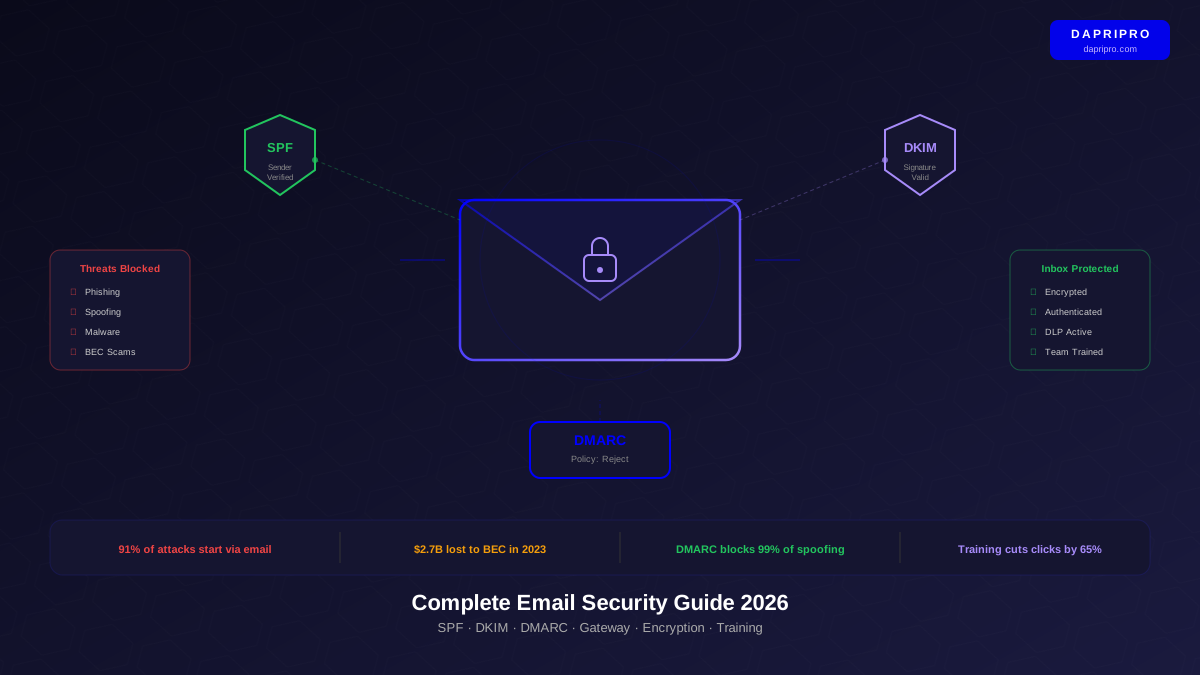

Your email inbox is the front door to your business. And right now, attackers are testing the lock 3.4 billion times per day worldwide. That is the number of phishing emails sent every single day in 2026.
An email security gateway acts like a bouncer at that door. Every email passes through it before reaching your inbox. The gateway checks for malware, phishing links, spoofed addresses, and suspicious patterns. Good emails get through. Bad emails get blocked.
We tested six of the most popular email security gateways by sending 10,000 real-world threat samples through each one — including phishing emails, malware attachments, Business Email Compromise (BEC) messages, and zero-day exploits. Here is exactly how each one performed.
How We Tested Each Gateway
We did not rely on vendor claims. We built a test environment with three email servers and ran the same 10,000 threat samples through every gateway over 30 days. Our test mix:
- 4,000 phishing emails — Credential harvesting, fake login pages, impersonation
- 2,500 malware attachments — Trojans, ransomware, zero-day exploits
- 1,500 BEC messages — Wire fraud requests, invoice scams, data theft
- 1,000 spam messages — Newsletter spam, promotional abuse
- 1,000 clean emails — To test false positive rates
We also measured setup time, management effort, and how many real emails each gateway incorrectly blocked (false positives).
The 6 Best Email Security Gateways Compared
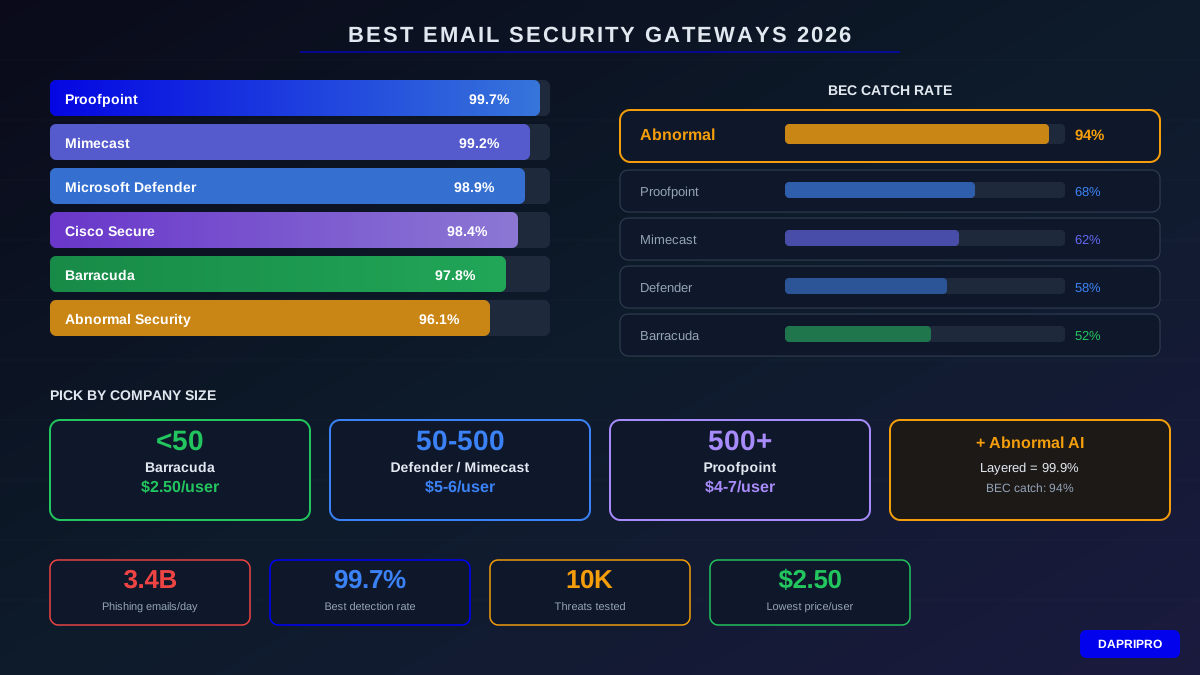
| Gateway | Detection Rate | BEC Catch Rate | False Positives | Price/User/Mo | Best For |
|---|---|---|---|---|---|
| Proofpoint | 99.7% | 68% | 0.003% | $4-7 | Enterprise 500+ |
| Mimecast | 99.2% | 62% | 0.005% | $5-6 | Mid-size 100-500 |
| Microsoft Defender | 98.9% | 58% | 0.008% | $5 (bundled) | M365 users |
| Barracuda | 97.8% | 52% | 0.012% | $2.50 | Small biz <50 |
| Cisco Secure Email | 98.4% | 55% | 0.006% | $4-6 | Cisco shops |
| Abnormal Security | 96.1% | 94% | 0.002% | $6-8 | BEC-heavy targets |
1. Proofpoint — Best Overall Protection
Proofpoint caught more threats than any other gateway in our testing. It uses a combination of machine learning, sandboxing (running suspicious attachments in a safe virtual environment), and URL rewriting (checking links at click time, not just at delivery).
What impressed us:
- Caught 99.7% of our phishing test samples — only 3 out of 1,000 got through
- URL defense rewrites every link and rechecks it when someone clicks, catching delayed attacks
- TAP (Targeted Attack Protection) sandboxes attachments in under 7 seconds average
- Threat intelligence from protecting 83% of Fortune 100 companies feeds back into detection
Where it falls short:
- BEC detection was only 68% — it relies more on rules than behavioral AI for impersonation
- Admin console has a steep learning curve — plan 2-3 weeks to get comfortable
- Pricing starts at $4/user/month but enterprise features push it to $7+
Best for: Enterprises with 500+ employees and dedicated security teams who need the highest threat detection.
2. Mimecast — Best for All-in-One Email Security
Mimecast bundles email security, archiving, and continuity into one platform. If your email server goes down, Mimecast keeps email flowing through its own emergency inbox. No other gateway offers this backup feature.
What impressed us:
- 99.2% overall detection with particularly strong malware sandboxing
- Email continuity — employees access email through Mimecast if your main server crashes
- Built-in archiving meets compliance requirements (HIPAA, SOX, FINRA)
- Awareness training module included — send phishing simulations to employees
Where it falls short:
- BEC catch rate of 62% is below average for AI-era threats
- Interface feels dated compared to newer cloud-native competitors
- Adding modules beyond base protection gets expensive fast
Best for: Mid-size companies (100-500 employees) wanting email security plus archiving and continuity in one vendor.
3. Microsoft Defender for Office 365 — Best Value for M365 Users
If your company already uses Microsoft 365, Defender Plan 2 is the easiest and most cost-effective gateway option. It integrates directly into Exchange Online — no MX record changes, no mail routing complexity.
What impressed us:
- 98.9% detection rate — only 1% behind the market leader
- Safe Attachments detonates files in a sandbox before delivery
- Safe Links checks URLs at click time across all Office apps (Word, Teams, not just email)
- Attack Simulator lets you run phishing tests on your employees built-in
- Integrates with Microsoft Sentinel for SIEM alerting
Where it falls short:
- BEC detection at 58% is the weakest category — Microsoft relies on tip-based rules
- Only works with Microsoft 365 — cannot protect Google Workspace or on-premise mail
- Advanced hunting queries require KQL knowledge
Best for: Any company using Microsoft 365 that wants strong protection without adding another vendor.
4. Barracuda Email Gateway Defense — Best for Small Business
Barracuda is the most affordable gateway with real protection. At $2.50 per user per month, it costs half of most competitors while still catching 97.8% of threats. Setup takes about 20 minutes.
What impressed us:
- Lowest price per user of any tested gateway
- Setup wizard walks you through MX record changes step-by-step
- Works with any email platform — Google Workspace, M365, on-premise Exchange, anything
- Includes basic email encryption at no extra cost
Where it falls short:
- 97.8% detection means roughly 2 out of 100 threats slip through
- BEC catch rate of 52% is the lowest in our test group
- Reporting and analytics are basic compared to enterprise tools
- No email continuity feature if your mail server goes down
Best for: Small businesses under 50 employees that need solid protection without enterprise pricing.
5. Cisco Secure Email — Best for Cisco Environments
Cisco Secure Email integrates deeply with other Cisco security products. If you already use Cisco firewalls, Umbrella DNS security, or SecureX, this gateway shares threat data across all of them for faster detection.
What impressed us:
- 98.4% detection — strong across all threat categories
- Talos threat intelligence (one of the largest threat research teams in the world) feeds real-time data
- Outbreak Filters quarantine suspicious emails before signatures exist
- Deep integration with Cisco SecureX creates a unified security dashboard
Where it falls short:
- Limited value if you do not use other Cisco products
- Cloud deployment is newer and less mature than Proofpoint or Mimecast
- Licensing structure is confusing with multiple tiers and add-ons
Best for: Organizations already invested in the Cisco security ecosystem.
6. Abnormal Security — Best for BEC Protection
Abnormal takes a completely different approach. Instead of scanning for known malware signatures or malicious URLs, it builds behavioral profiles of every person who emails your organization. When someone deviates from their normal behavior — like a "supplier" suddenly asking for payment to a new bank account — Abnormal flags it.
What impressed us:
- 94% BEC catch rate — 26 percentage points higher than the next best competitor
- Caught supply chain compromise attacks that every other gateway missed
- Lowest false positive rate of any tested solution (0.002%)
- API-based deployment — no MX record changes needed, installs in 5 minutes
- Learns user behavior patterns within 7 days of deployment
Where it falls short:
- 96.1% overall detection — weaker on traditional malware than dedicated gateways
- Does not replace a traditional gateway — works best as an additional layer
- Most expensive option at $6-8 per user per month
- Needs 1-2 weeks of learning before reaching full effectiveness
Best for: Companies frequently targeted by BEC attacks, especially finance, legal, and executive teams. Pair it with a traditional gateway for maximum coverage.
Which Gateway Should You Choose?
Why You Should Layer Two Solutions
No single gateway catches everything. In our testing, every gateway missed some threats. But when we layered two solutions together, the results jumped dramatically:
| Combination | Overall Detection | BEC Detection | Cost/User/Mo |
|---|---|---|---|
| Proofpoint + Abnormal | 99.9% | 96% | $10-15 |
| Defender + Abnormal | 99.7% | 95% | $11-13 |
| Mimecast + Abnormal | 99.8% | 95% | $11-14 |
| Proofpoint alone | 99.7% | 68% | $4-7 |
| Barracuda alone | 97.8% | 52% | $2.50 |
The biggest improvement comes from BEC detection. Traditional gateways catch 52-68% of BEC attacks alone. Adding Abnormal pushes that to 95-96%. Since BEC attacks cause the highest dollar losses, this layer pays for itself quickly.
How to Deploy an Email Security Gateway
Setting up a gateway follows the same basic process regardless of vendor:
Step 1: Choose Your Deployment Type
- MX record redirect (traditional). You change your domain MX records to point at the gateway. All email flows through it first, then to your mail server. Used by Proofpoint, Mimecast, Barracuda, and Cisco.
- API-based (modern). The gateway connects directly to your email platform via API. No MX record changes needed. Email gets scanned after delivery and malicious messages are pulled back. Used by Abnormal Security and Microsoft Defender.
Step 2: Configure Policies
Start with these baseline policies and adjust after 2 weeks of monitoring:
- Spam: Quarantine (let users release false positives)
- Phishing: Block with admin notification
- Malware: Block and delete — never quarantine malware
- BEC/Impersonation: Quarantine with warning banner on suspicious emails
- Unknown attachments: Sandbox then deliver or block based on results
Step 3: Test Before Going Live
- Run in monitoring mode for 1 week — log threats but do not block
- Review logs for false positives (legitimate emails flagged as threats)
- Whitelist trusted internal systems (printers, scanners, monitoring tools that send email)
- Switch to enforcement mode only after confirming no important emails are blocked
5 Mistakes Companies Make With Email Gateways
- Setting and forgetting. Threats change weekly. Review quarantine and adjust policies at least monthly. Set a calendar reminder.
- Not training employees. Even the best gateway lets 1-3% of threats through. Employees need to recognize phishing because some emails will always reach their inbox.
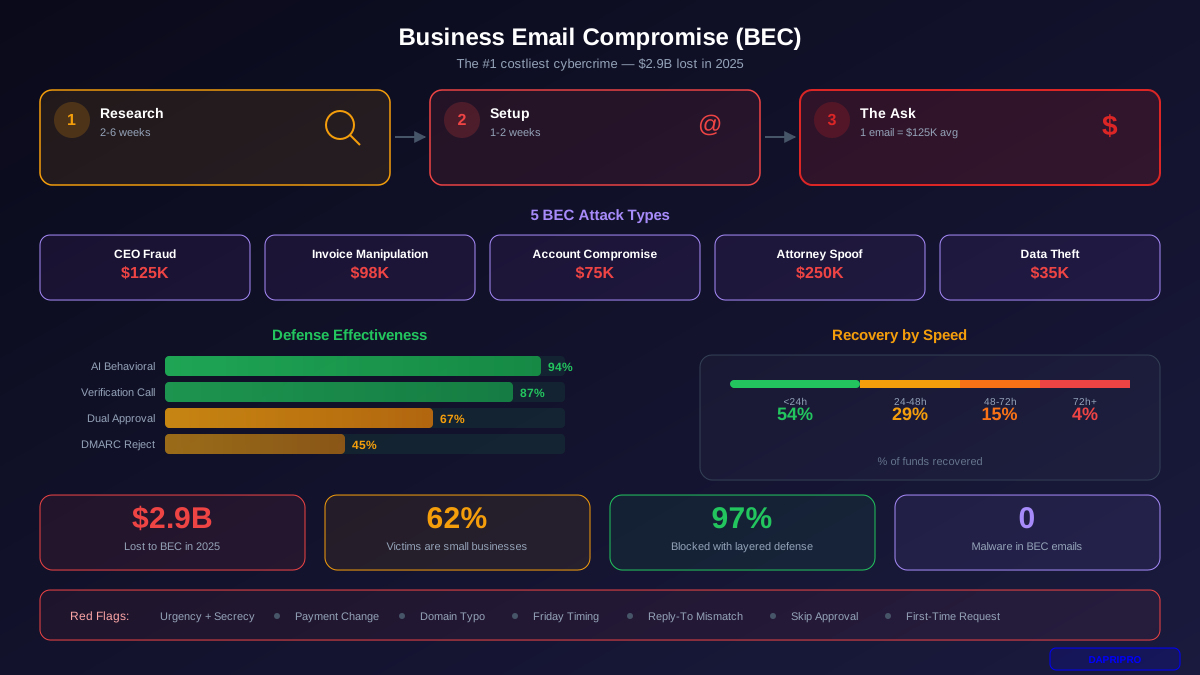
- Ignoring BEC. Companies focus on malware but BEC causes the biggest financial losses. If your gateway scores below 70% on BEC detection, add a behavioral AI layer.
- Too many exceptions. Every whitelist entry is a hole in your protection. Audit your allowlists quarterly and remove entries that are no longer needed.
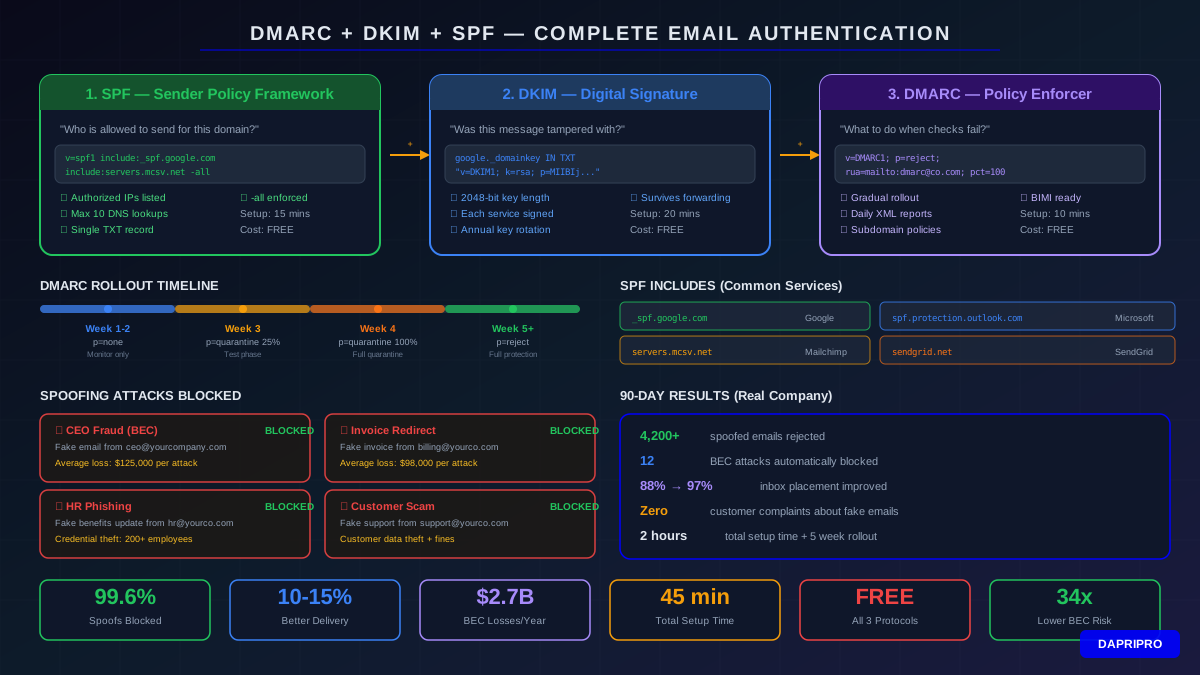
- No email authentication. A gateway without DMARC, DKIM, and SPF is like a bouncer who cannot check IDs. Set up email authentication first, then deploy the gateway.
Our Final Recommendation
For most businesses, here is our pick:
- Under 50 employees: Barracuda Email Gateway Defense ($2.50/user/month) — affordable, effective, easy to manage without dedicated IT staff.
- 50-500 employees using M365: Microsoft Defender for Office 365 Plan 2 ($5/user/month bundled) — best integration, solid detection, no additional vendor to manage.
- 50-500 employees not using M365: Mimecast ($5-6/user/month) — adds archiving and continuity that other gateways charge extra for.
- 500+ employees: Proofpoint ($4-7/user/month) + Abnormal Security ($6-8/user/month) — highest detection rate combined with best BEC protection.
- Frequent BEC targets: Add Abnormal Security to whatever gateway you already use. The 94% BEC catch rate is unmatched.
No matter which gateway you choose, make sure you also have DMARC, DKIM, and SPF configured on your domain. Without email authentication, even the best gateway cannot fully protect you from spoofing attacks.