
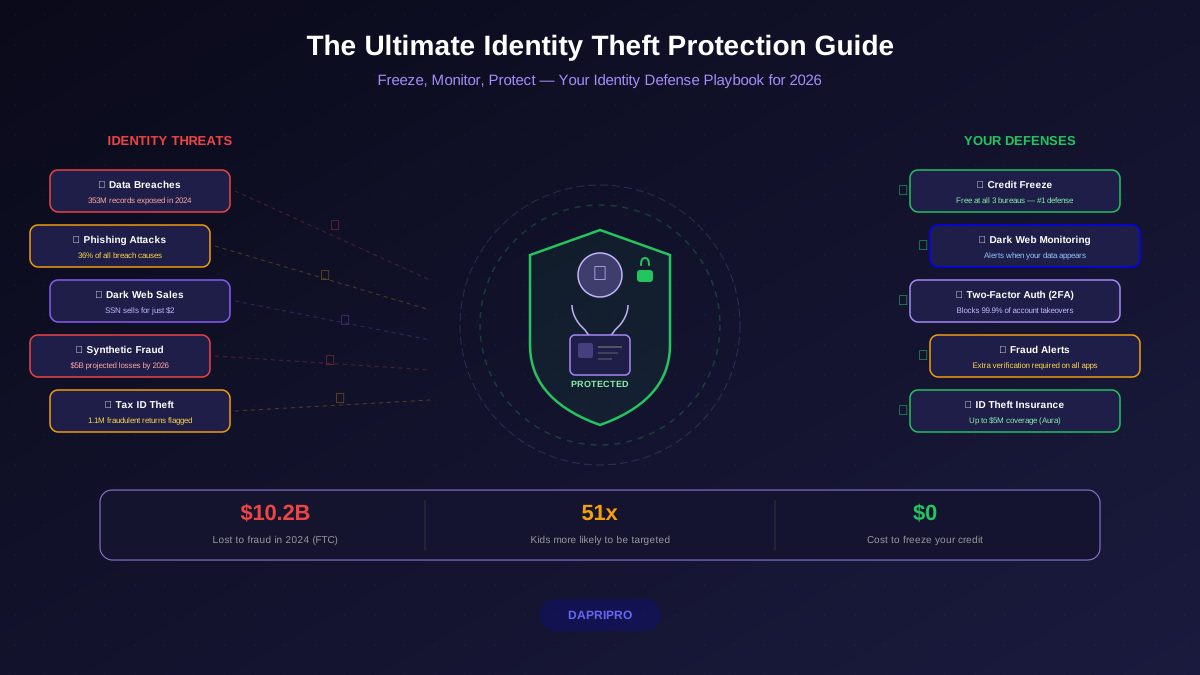
Imagine waking up to discover that someone has been using your name to buy expensive stuff, open credit cards, and even rent an apartment — all without you knowing. That is identity theft, and it is one of the fastest-growing crimes in the world. In 2024 alone, the FTC received over 5.7 million fraud and identity theft reports, with victims losing a combined $10.2 billion.
The scary part? You do not have to be an adult to become a victim. Kids and teenagers are actually 51 times more likely to have their identity stolen than adults. Criminals love targeting young people because their credit histories are blank — making the theft harder to detect for years.
This guide breaks down everything you need to know about identity theft protection. You will learn what identity theft actually is, how criminals steal your information, the best ways to protect yourself, and exactly what to do if it happens to you or your family.
What Is Identity Theft? (And Why Should You Care?)
Identity theft happens when someone steals your personal information and uses it to pretend to be you. Think of it like someone creating a clone of you — but only on paper. They use your details to do things like:
- Open credit cards and go on shopping sprees you never agreed to
- Take out loans in your name that you will be expected to pay back
- File fake tax returns to steal your refund money
- Use your health insurance to get medical treatment
- Give your name to police when they get arrested (creating a criminal record for you!)
The personal information criminals want most includes your Social Security number (SSN), date of birth, home address, bank account numbers, and credit card details. With just your SSN and date of birth, a thief can do enormous damage.
The 7 Main Types of Identity Theft
Not all identity theft looks the same. Here are the seven types you need to know about:
- Financial identity theft — The most common type. Criminals use your info to open bank accounts, credit cards, or loans. According to the FTC, this makes up about 65% of all identity theft cases.
- Tax identity theft — Someone files a tax return using your SSN to steal your refund. The IRS flagged 1.1 million fraudulent returns in 2024.
- Medical identity theft — A thief uses your insurance to get healthcare. This can mess up your medical records with dangerous wrong information.
- Criminal identity theft — Someone gives your name and info to law enforcement when caught committing a crime.
- Synthetic identity fraud — Criminals mix real data (like a child's SSN) with fake details to create an entirely new identity. This is the fastest-growing type of financial crime.
- Child identity theft — Targeting kids specifically because their credit is clean. Often committed by family members or people who have access to school records.
- Employment identity theft — Someone uses your SSN to get a job, which can cause tax problems for you.
How Criminals Steal Your Identity
Understanding how thieves get your information is the first step to protecting yourself. Here are the most common methods:
Data Breaches (The Biggest Threat)
When a company you use gets hacked, your personal data can be exposed to millions of criminals at once. In 2024, over 3,200 data breaches exposed more than 353 million people's records in the US alone. Major breaches at companies like AT&T, Change Healthcare, and National Public Data exposed hundreds of millions of Social Security numbers.
The worst part? You cannot control whether a company keeps your data safe. All you can do is limit what you share and monitor for misuse.
Phishing and Social Engineering
Phishing is when criminals send fake emails, texts, or messages that look like they are from real companies (like your bank or Amazon). They trick you into clicking a link and entering your login, credit card, or personal details on a fake website. In 2024, 36% of all data breaches involved phishing, according to the Verizon Data Breach Investigations Report.
Physical Theft and Mail Fraud
Sometimes identity theft is low-tech. Criminals steal wallets, dig through trash for bank statements (called dumpster diving), or redirect your mail to their address. They can even steal pre-approved credit card offers right from your mailbox.
Social Media Oversharing
Posting your birthday, school name, pet's name, or mother's maiden name on social media gives thieves the answers to your security questions. Some criminals use these details alongside stolen SSNs to pass identity verification checks.
The Credit Freeze: Your #1 Free Defense Against Identity Theft
A credit freeze is hands down the most powerful free tool for identity theft protection. It locks your credit report so that no one — including you — can open new accounts until you temporarily lift or remove the freeze.
Here is why a credit freeze is so effective:
| Feature | Credit Freeze | Credit Lock | Fraud Alert |
|---|---|---|---|
| Cost | Always free (federal law) | Free to $25/month | Always free |
| Blocks new accounts | Yes — completely | Yes — completely | No — only requires extra verification |
| Legal protection | Federal law (2018) | Contract with bureau | Federal law |
| Ease of toggling | Takes a few minutes online | Instant toggle via app | Stays active for 1 year |
| Our recommendation | ✅ Best overall protection | Good if you need frequent access | Use as a supplement |
How to Freeze Your Credit (Step-by-Step)
You need to freeze your credit at all three major credit bureaus. Here is exactly how:
- Equifax — Visit equifax.com/personal/credit-report-services or call 1-800-349-9960. Create an account and select "Place a Freeze."
- Experian — Go to experian.com/freeze or call 1-888-397-3742. Sign up and choose "Security Freeze."
- TransUnion — Visit transunion.com/credit-freeze or call 1-888-909-8872. Register and click "Add a Freeze."
Each bureau gives you a unique PIN or password. Keep that in a safe place because you will need it to temporarily lift the freeze when applying for credit.
Pro tip: Parents can also freeze their children's credit at all three bureaus. Since kids under 16 usually have no credit file, the bureaus create one specifically to freeze it. This is the best way to prevent synthetic identity fraud targeting minors.
Dark Web Monitoring: Is Your Data Being Sold?
Dark web monitoring services scan the hidden parts of the internet where criminals buy and sell stolen data. If your email, password, SSN, or credit card number shows up, you get an alert so you can act fast.
Here is what dark web monitoring looks for:
- Email addresses and passwords from data breaches
- Social Security numbers listed for sale
- Credit card numbers and bank account details
- Medical records and insurance information
- Phone numbers and physical addresses
Free dark web scans are available from services like Have I Been Pwned (haveibeenpwned.com). However, comprehensive ongoing monitoring is typically included in paid identity theft protection services.
Best Identity Theft Protection Services Compared (2026)
While free tools like credit freezes and fraud alerts are essential, dedicated identity theft protection services add serious layers of monitoring and recovery support. Here are the top services for 2026:
LifeLock (by Norton) — Best Overall
LifeLock has been the industry leader for over a decade. Their plans include dark web monitoring, credit monitoring at all three bureaus, up to $3 million in stolen funds reimbursement, and dedicated US-based restoration agents. Plans range from $12 to $35 per month.
Best for: Families wanting comprehensive, proven identity theft protection with the highest insurance limits.
Aura — Best for Families
Aura combines identity theft protection with a VPN, password manager, antivirus, and parental controls — all in one app. Their family plan covers up to 5 adults and unlimited children. Each adult gets up to $5 million in identity theft insurance. Plans range from $12 to $37 per month.
Best for: Families with kids who want an all-in-one security solution.
Identity Guard — Best Budget Option
Identity Guard uses IBM Watson AI to detect threats and offers solid protection starting at just $9 per month. Their plans include AI-powered alerts, dark web monitoring, and up to $1 million in identity theft insurance.
Best for: Individuals and families who want quality protection at the lowest price.
Quick Comparison
| Service | Starting Price | Insurance | Family Plan | Key Extras |
|---|---|---|---|---|
| LifeLock | $12/month | Up to $3M | Yes (up to 5 kids) | Norton 360 included, court records monitoring |
| Aura | $12/month | Up to $5M | Yes (unlimited kids) | VPN, password manager, antivirus, parental controls |
| Identity Guard | $9/month | Up to $1M | Yes | IBM Watson AI alerts, Safe Browsing extension |
| IDShield | $15/month | Up to $3M | Yes | Licensed private investigators on staff |
Protecting Kids and Teens from Identity Theft
If you are a kid or teen reading this, you might think identity theft is only an adult problem. Unfortunately, you are actually a bigger target. Here is why:
- Your credit file is completely empty, so criminals can build a whole fake identity on it for years before anyone checks
- You probably will not discover the theft until you try to get your first credit card, student loan, or apartment — which could be years from now
- Schools, doctor's offices, and sports organizations all collect your SSN, creating more places for data to leak
Warning Signs Your Identity May Already Be Stolen
Watch for these red flags that suggest someone is using your identity:
- Getting pre-approved credit card offers in the mail (kids should not receive these)
- Receiving bills or collection notices for things you never bought
- Being denied a bank account or student loan
- Getting a notice from the IRS about taxes you never filed
- A credit report already exists at the bureaus when you have never applied for credit
Prevention Steps Every Young Person Should Take
- Ask your parents to freeze your credit at all three bureaus. This is free and is the best preventive measure.
- Never share your SSN unless absolutely necessary. Ask if there is an alternative ID number they can use.
- Use strong, unique passwords for every online account. A password manager makes this easy.
- Enable two-factor authentication (2FA) on all your important accounts, especially email and social media.
- Be cautious on social media — do not post your birthday, school name, or other details that could help someone answer your security questions.
How to Recover from Identity Theft: The Complete Action Plan
If you discover that your identity has been stolen, do not panic — but do act fast. Speed matters enormously. The identity theft recovery process has clear steps, and following them carefully will minimize the damage.
Step 1: Place a Fraud Alert (5 minutes)
Call any one of the three credit bureaus and request a fraud alert. By law, they must notify the other two bureaus. A fraud alert forces lenders to take extra steps to verify your identity before opening new accounts.
- An initial fraud alert lasts 1 year and is free
- An extended fraud alert lasts 7 years (requires an FTC Identity Theft Report)
Step 2: Freeze Your Credit (15 minutes)
A fraud alert is a warning. A credit freeze is a wall. Freeze your credit at all three bureaus immediately. This prevents thieves from opening any new accounts, even if they have all your personal info.
Step 3: File an FTC Report (20 minutes)
Go to IdentityTheft.gov and report the theft. The FTC creates a personalized recovery plan specifically for your situation. You will also get an official Identity Theft Report, which you need for the next steps.
Step 4: File a Police Report (varies)
Take your FTC Identity Theft Report to your local police department and file a report. Some companies and banks require a police report to remove fraudulent accounts.
Step 5: Close Fraudulent Accounts (1-2 hours)
Contact the fraud department at every company where the thief opened accounts or made purchases in your name. Ask them to close the fraudulent accounts immediately and send you confirmation in writing.
Step 6: Monitor Everything (ongoing)
Check your credit reports at AnnualCreditReport.com weekly (yes, you can now get free weekly reports). Watch for new accounts, addresses, or inquiries you don't recognize. Keep monitoring for at least 12 months.
Building Your Complete Identity Theft Protection Plan
The best protection uses multiple layers working together. Think of it like a castle with a moat, walls, guards, AND locked doors — not just one of those things.
Layer 1: Free Protection (Everyone Should Do This)
- ✅ Credit freeze at all three bureaus
- ✅ Fraud alert as extra backup
- ✅ Free weekly credit reports from AnnualCreditReport.com
- ✅ Have I Been Pwned — check if your email appears in data breaches
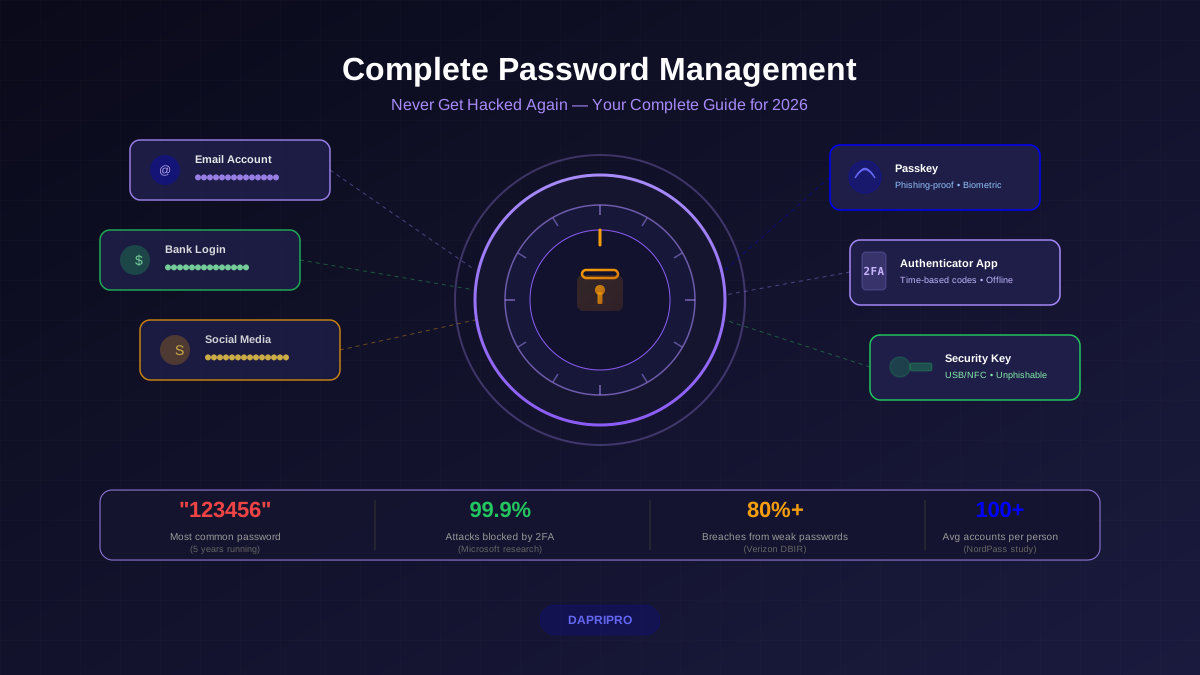
- ✅ Strong, unique passwords with a password manager
- ✅ Two-factor authentication on all important accounts
- ✅ IRS Identity Protection PIN — prevents someone else from filing your taxes
Layer 2: Paid Monitoring Services ($9-37/month)
- 🔐 Real-time credit monitoring at all three bureaus
- 🌐 Dark web monitoring for your SSN, email, and personal data
- 📱 Instant alerts when suspicious activity is detected
- 👤 Dedicated recovery agents who handle the paperwork for you
- 💰 Identity theft insurance covering stolen funds and legal fees
Layer 3: Advanced Habits
- 🔒 Use a VPN on public Wi-Fi networks
- 📬 Sign up for USPS Informed Delivery to see what mail is coming to your address
- 🗑️ Shred documents that contain personal information before throwing them away
- 📧 Use email aliases for different online accounts so breaches don't expose your main email
- 🏥 Review your insurance Explanation of Benefits (EOB) statements for medical treatments you didn't receive
Eye-Opening Identity Theft Statistics for 2026
These numbers show why identity theft protection is not something to put off:
- $10.2 billion lost to fraud in 2024 (FTC), up 14% from the previous year
- 1 in 3 Americans has been a victim of identity theft at some point in their lives
- Child identity theft affects 1.25 million children annually in the US
- Average victim spends 100-200 hours resolving identity theft
- Synthetic identity fraud is expected to cause $5 billion in losses by 2026
- Only 23% of identity theft cases get fully resolved within a month
Expert Recommendations for 2026
According to the Identity Theft Resource Center (ITRC) and the FTC, the top recommendations for 2026 include:
"The single most effective step consumers can take is freezing their credit at all three bureaus. It is free, it is fast, and it blocks the most common form of identity theft — fraudulent new account openings."
— Eva Velasquez, CEO, Identity Theft Resource Center
- Freeze first, monitor second. A credit freeze prevents fraud. Monitoring only detects it after the fact.
- Protect children proactively. Do not wait until your child is 18 to check their credit. Freeze it now.
- Use an IRS IP PIN. Request a 6-digit Identity Protection PIN from the IRS to prevent tax identity theft.
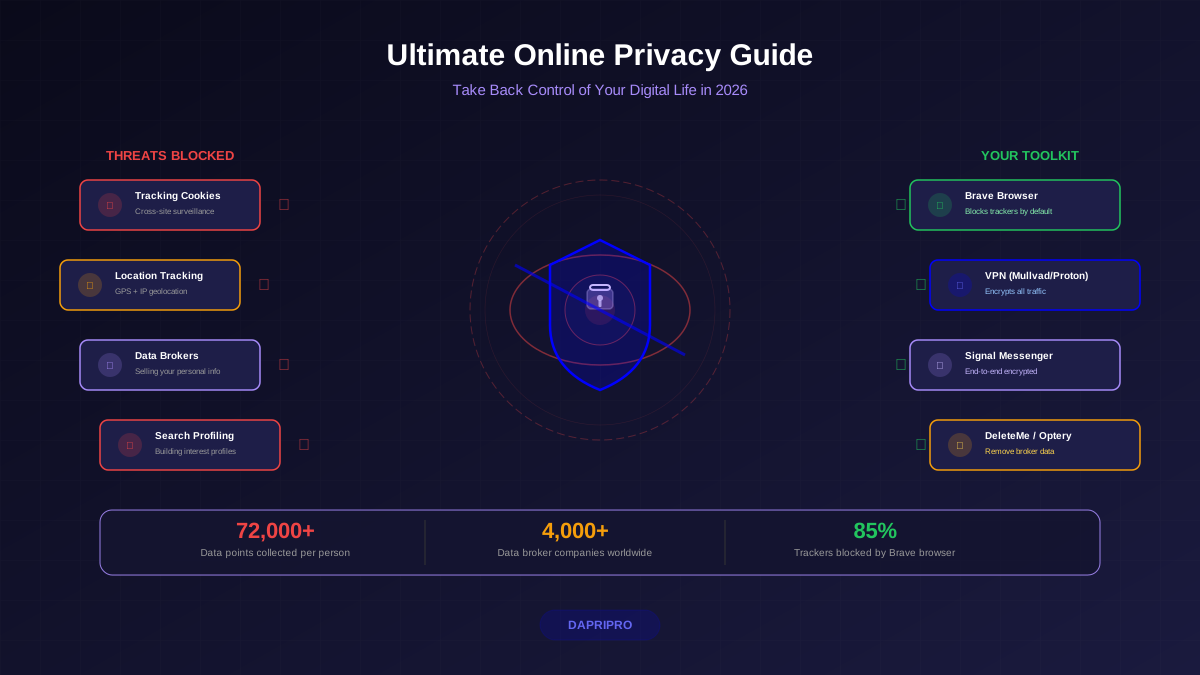
- Opt out of data broker sites. Services like DeleteMe or Privacy Duck can remove your personal information from people-search websites.
Take Control of Your Identity Security Today
Identity theft can feel overwhelming, but protecting yourself does not have to be complicated. Start with the free steps — freeze your credit, enable 2FA everywhere, and use strong unique passwords. Those three actions alone block the vast majority of identity theft attempts.
If you want extra peace of mind, a paid identity theft protection service like LifeLock, Aura, or Identity Guard adds continuous monitoring, instant alerts, and insurance to cover you if something slips through.
The most important thing is to start today. Every day without a credit freeze is a day your identity is vulnerable. It takes less than 30 minutes to freeze your credit at all three bureaus, and it could save you hundreds of hours of recovery work later.
Remember: criminals do not care how old you are. Whether you are 12 or 62, your identity has value. Protect it like you would protect your most prized possession — because it is.